





Industry · Bathroom Cabinets & Vanities

The bathroom already exists. The furniture has to fit it.

Width to the centimetre, a basin that suits it, fronts in a finish chosen against the tiles, and a budget decided before any of it. That is four decisions the catalogue cannot show together, and the reason quoting a bathroom takes a morning.

Why bathroom furniture resists a catalogue

A vanity is sold against a wall you have never seen.

Widths in five steps, two basin types, a dozen front finishes, handles or handleless, wall-hung or floor-standing. The showroom displays four of them, and the other several hundred live in a price list.

So the customer describes their bathroom, someone builds a quote by hand, and a day later a number arrives with no picture attached. Meanwhile the sale is being decided in a shop that answered faster.

1
cabinet range, every combination

The range is modelled once. Widths, fronts, basins and handles are applied to it, so every combination renders from the same source, and a new finish reaches the whole range at once.

In the meeting
a bespoke bathroom is quoted with a picture
0
quotes sent without a picture
One
record behind shop, showroom and quote
What changes for you

From a price list and a promise to a picture and a price.

The unit is built to the wall, not picked from a list.

Width, height and depth are inputs. The customer sets the space they have and the model rebuilds, instead of choosing the nearest catalogue size and hoping.
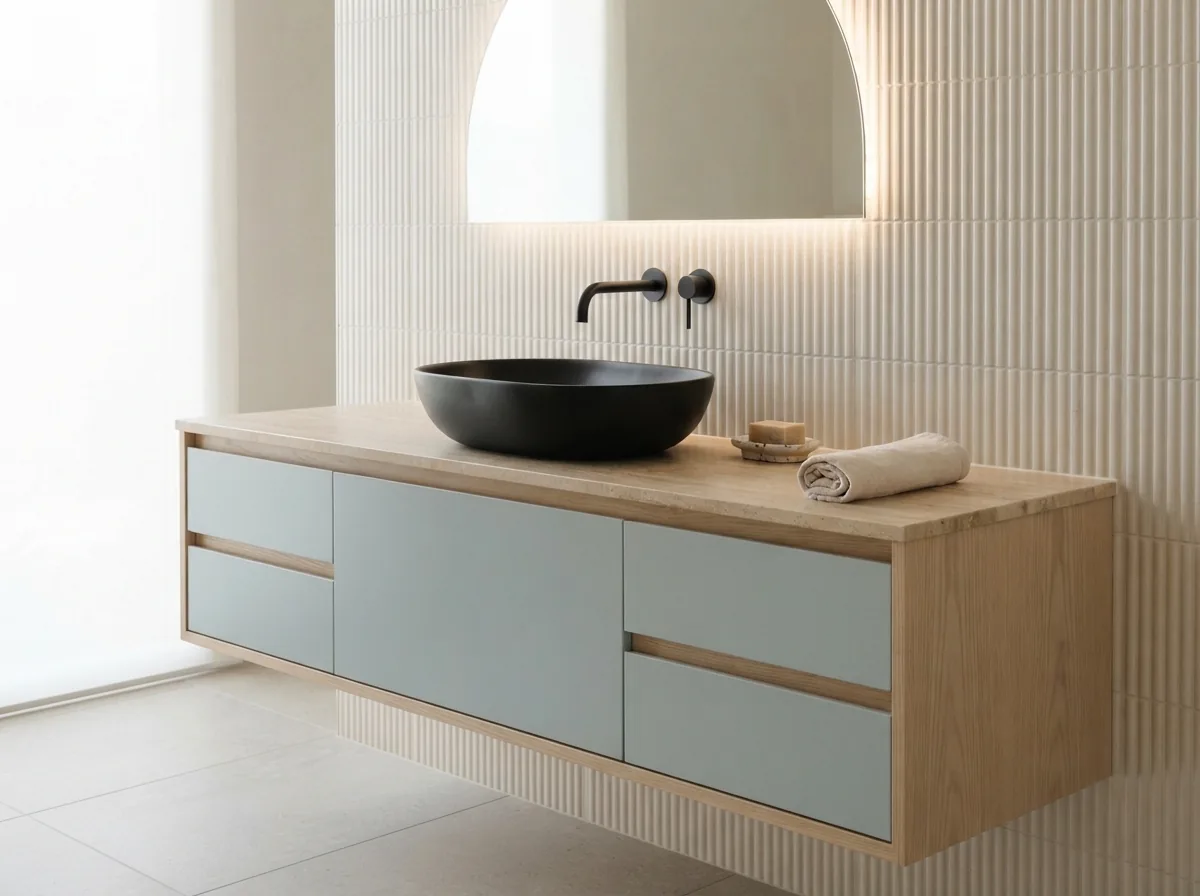
A wall-hung vanity with an oak frame, sage fronts and a stone top, built to the width of the wall it hangs on

Fronts and basins are seen together.

The finish that sells a bathroom is the one that works against the tiles and the basin beside it. Rendering the combination is the only way to show that, and photographing every pairing is not possible.
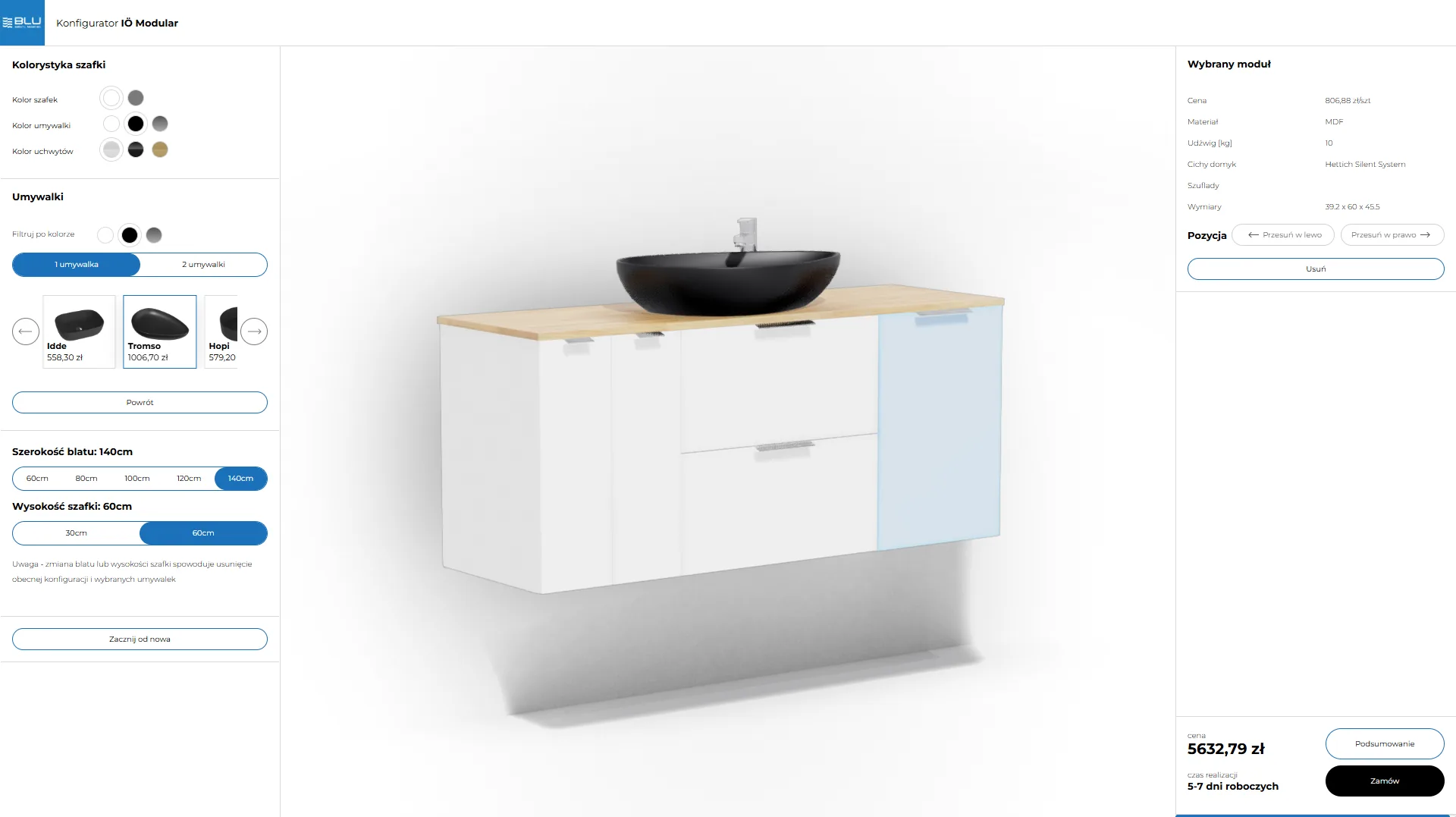
The configurator screen: cabinet, basin and handle colours on the left, the unit in the middle, the picked module's price, material and dimensions on the right

The quote leaves with the render on it.

Configure, price, quote as one motion. The offer carries visuals of that exact unit, so the customer is comparing their bathroom against a number, not a number against nothing.
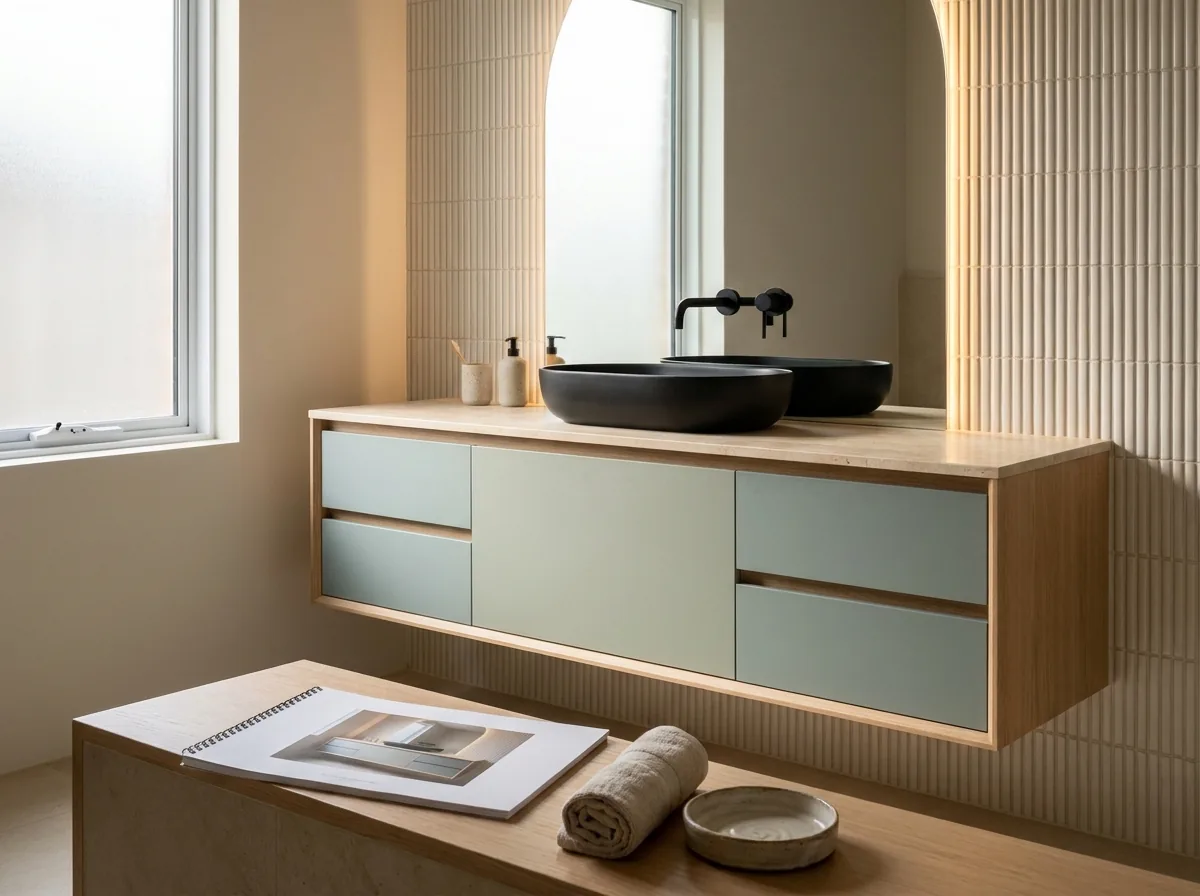
The same bathroom with the printed offer lying on the bench, the render of that exact unit on its cover

Bathroom furniture is bought once every fifteen years, by someone who has never bought it before and is terrified of getting it wrong.

Showing them the room settles that faster than any price ever will.

How it fits your business

One catalogue, three places it has to work.

The showroom

Four units on the floor stop being the range. The screen beside them carries every width and front, configured with the customer standing there.

The website

Customers design and price at home, then add the configured unit to the cart, no quotation round trip, no waiting for a reply.

The dealer network

Everyone quotes from the same rules and the same prices, so the number a customer hears does not depend on which branch they walked into.

Valid combinations only

Which basin fits which top, which widths take two drawers, what a wall-hung unit needs behind it. The rules live in the catalogue, not in a colleague's head.

A real finish library

Board decors, RAL and HEX, rendered on the actual fronts under the same light, so a specified colour stays a specified colour.

Into your systems

The configured unit leaves as structured data for e-commerce, POS or CRM, so nothing is retyped between the showroom and the workshop.

FAQ

Questions bathroom furniture makers actually ask.

Most of our sales go through showrooms and dealers, not our website.
Then it is a tool for the showroom first. The value is that everyone quotes from the same rules and the same prices, and the customer leaves with a picture rather than a promise to email one.
Our units are made to measure. Does a configurator apply?
That is exactly where it applies. Width and depth are inputs rather than a list of finished sizes, so what gets priced is the unit that fits the wall the customer actually has.
How many finishes can it carry?
Board decors from the usual producers plus full RAL and HEX, rendered on the real fronts under the same light. Comparing finishes stops being comparing photographs taken on different days.
Can it stop customers configuring something impossible?
Yes, and it should. Which basin fits which top, which widths take two drawers, what a wall-hung unit needs behind it: those rules sit in the catalogue, so an invalid unit never reaches your workshop.
Can customers buy directly, or only request a quote?
Either. Integrated with the storefront, the configured unit goes into the cart and is paid for; where a person has to be involved, the quote leaves already priced and already rendered.
We already photograph our range.
Keep the photography. Renders cover the combinations it cannot reach, the other several hundred, and they sit beside your hero shots rather than replacing them.

Sell the vanity that fits their bathroom

Send us one cabinet range and your finish list. You get every width, front and basin combination, rendered and priced as the customer builds it.

1Mvariants from one source
Same dayprice changes live in the shop
No-codeconfigurators the client runs
No demo booking, no sales sequence. We reply by email and take it from there.