




Upholstered beds

The bed your buyer wants is the one you never photographed.

Bases, sizes, headboard heights, hundreds of weaves. That choice is why they pick you, and it is the one thing a flat photo cannot show.

Why it matters for bed makers

Of all the furniture you can buy, beds are the ones that belong on a screen.

The shape is a known quantity. Your buyer is not wondering what a bed looks like.

What they are actually buying is the choice: base, size, headboard height, hundreds of weaves. That is a matrix in the millions, and a photoshoot covers a rounding error of it.

2.2M
product visuals, no camera

MyBed's full sellable matrix of fabric, size and headboard height, generated from parametric models.

How people buy a bed

Four stages, and a tool sized to each one.

Each stage reaches fewer buyers, and each of them puts in more effort. So the tool grows deeper as they go, and nobody meets the full configurator before they want it.

1

Inspiration

Pinterest and Instagram, scrolled at night. The buyer is judging looks and asking one price question: can I afford this at all? What works here is your beds in fabrics and rooms worth saving, rendered from the same models as every other visual.

2

First check

They land on your site. A product page with a handful of options already visualised serves the buyer who wants a bed as it is, and shows everyone else that personalisation is real. The full option list waits for the next step.

3

Effort

For buyers ready to spend an evening on it. Every option opens up: at MyBed, 542 fabrics across 21 collections and millions of combinations. The job now is pinpointing the right one, so this is where AI search earns its place and compatibility rules only let them build a bed you can make.

4

Showroom

For buyers who come in. A sales rep drives the full configurator with them, so it can be deep and complex. 3D view works well here, because the real bed and the swatches are within reach. Hovden runs its modular sofa configurator in its showrooms this way.

Proven · case-backed
“

Our beds come in more combinations than we could ever photograph or explain on a page. Now the customer builds the exact one they want and sees it.

Dominik Tomaszczyk
MyBed.pl
Challenge

Three base types, over 500 fabrics across 21 collections, every size and nine headboard heights, on product pages that could show almost none of it.

Solution / Results
  • 2.2 million prerendered visuals, so every pickable combination is live on the page.
  • A configurator inside the existing Shoper store, drawing on those renders.
  • Every configured bed lands as a spec-complete, manufacturable order.
Read the MyBed case study →
What changes for you

From a catalog you cannot show to a bed the buyer builds and buys.

See it

From a handful of photos to every bed you actually sell.

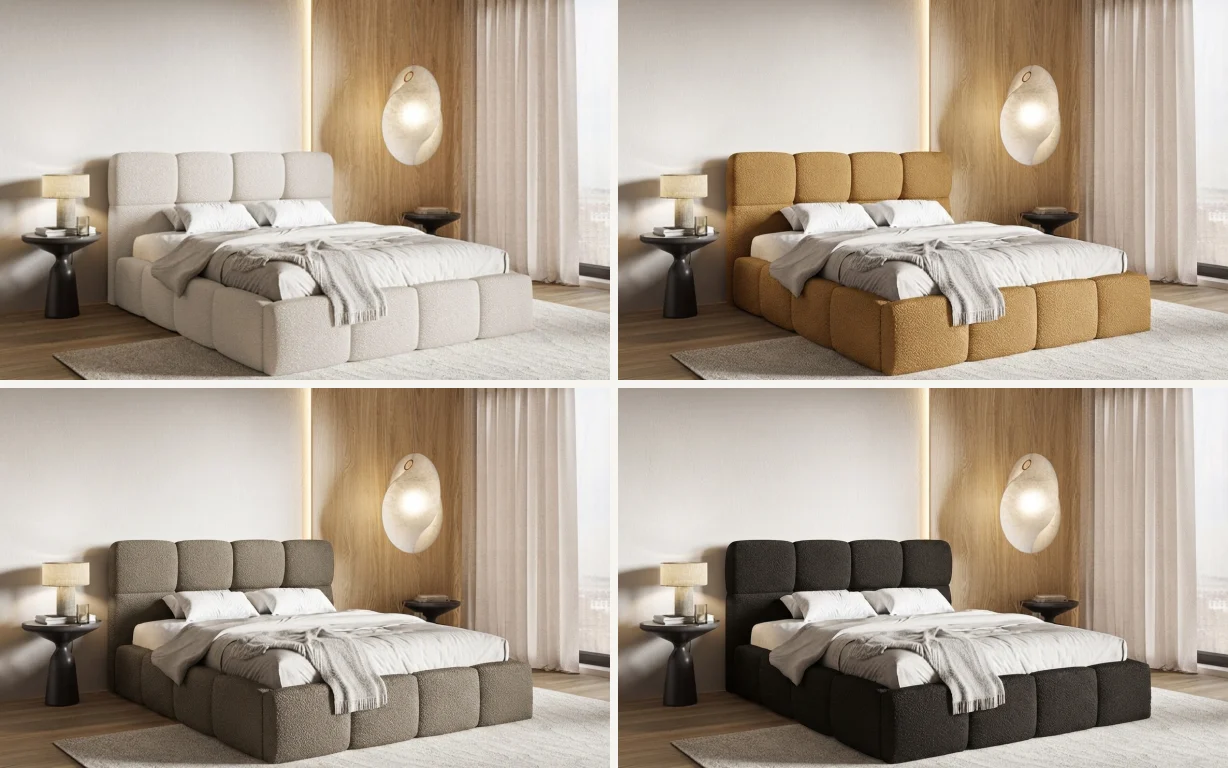
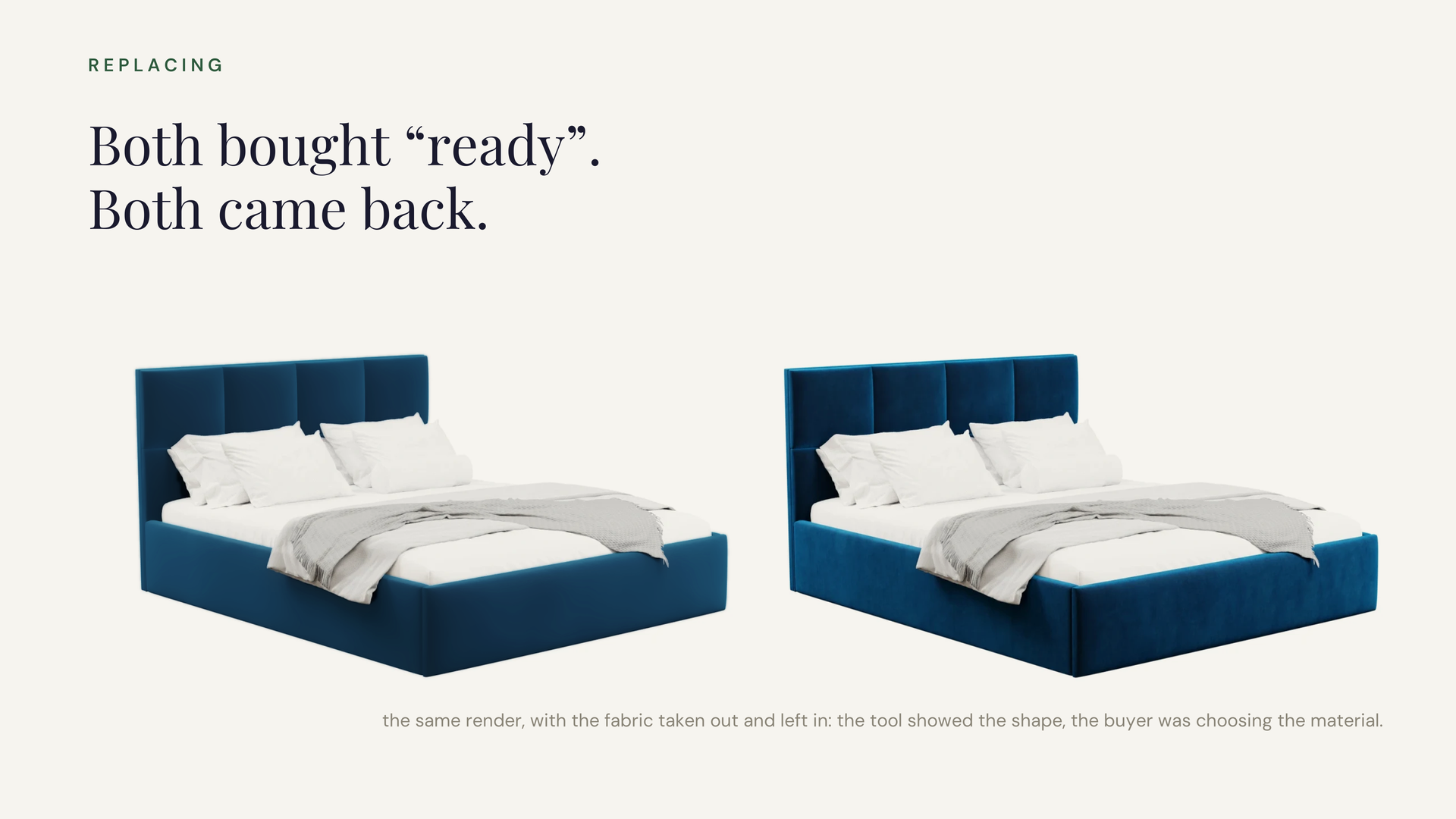
One parametric model per bed becomes every fabric, every size, every headboard height, prerendered in bulk. The buyer sees the exact bed they picked, not "shown in grey, other fabrics available".

The same upholstered bed rendered in cream, camel, taupe and charcoal bouclé
Find the fabric

From scrolling fabrics to finding the right one.

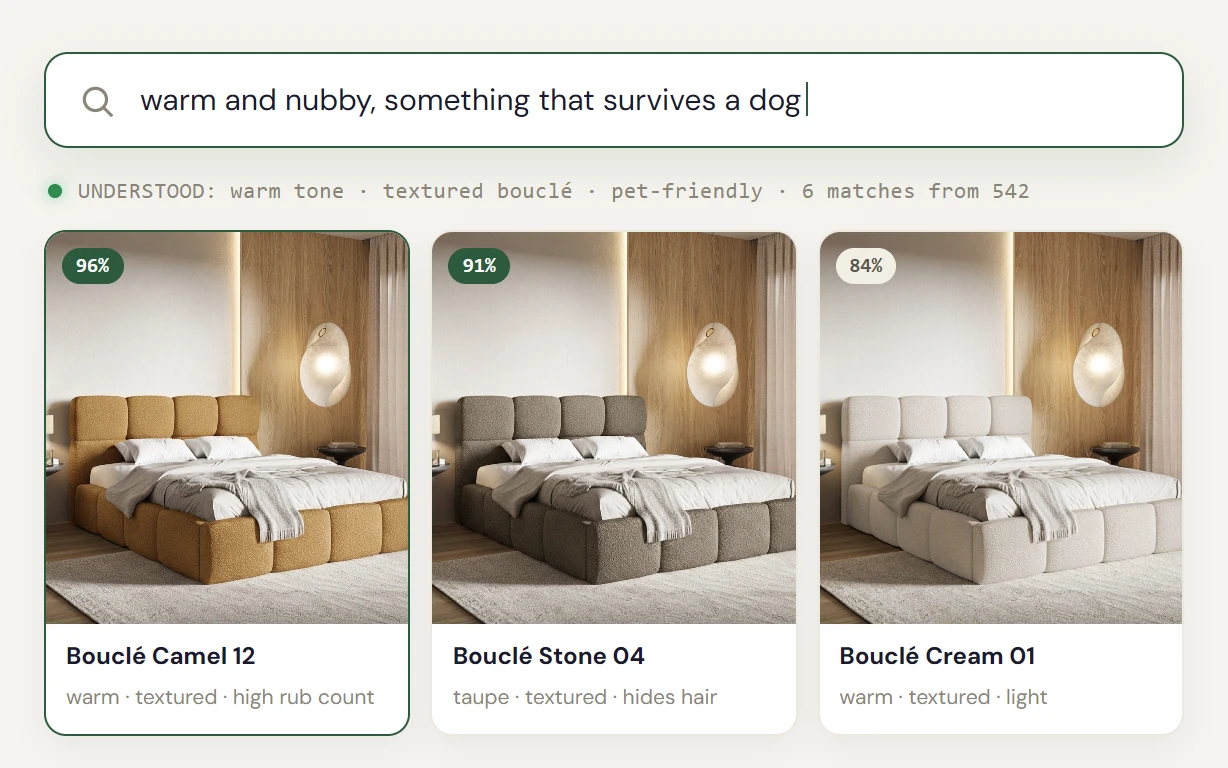
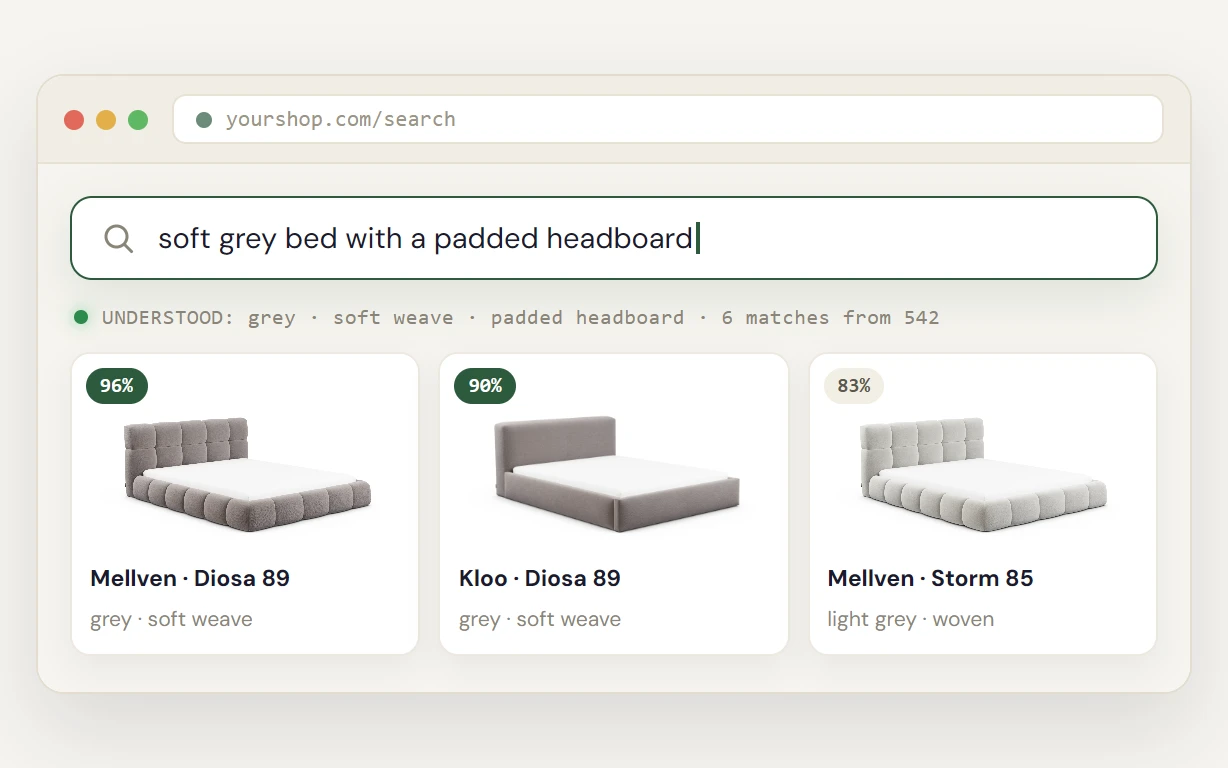
Buyers describe fabric the way they would tell a salesperson: warm, linen-look, something that survives a dog. None of that is a filter value, so the buyer asks in their own words and the catalog answers.

yourshop.com/search
A plain-language search, warm and nubby, something that survives a dog, answered with the bed in three matching bouclé fabrics
Know it fits

From dimensions only your upholsterer knows to dimensions on every variant.

You know the numbers belong on the page, and nobody could ever produce them at the scale of your catalog. Put them in the catalog once. The shot renders itself on every size and every height, and the configurator draws them live.
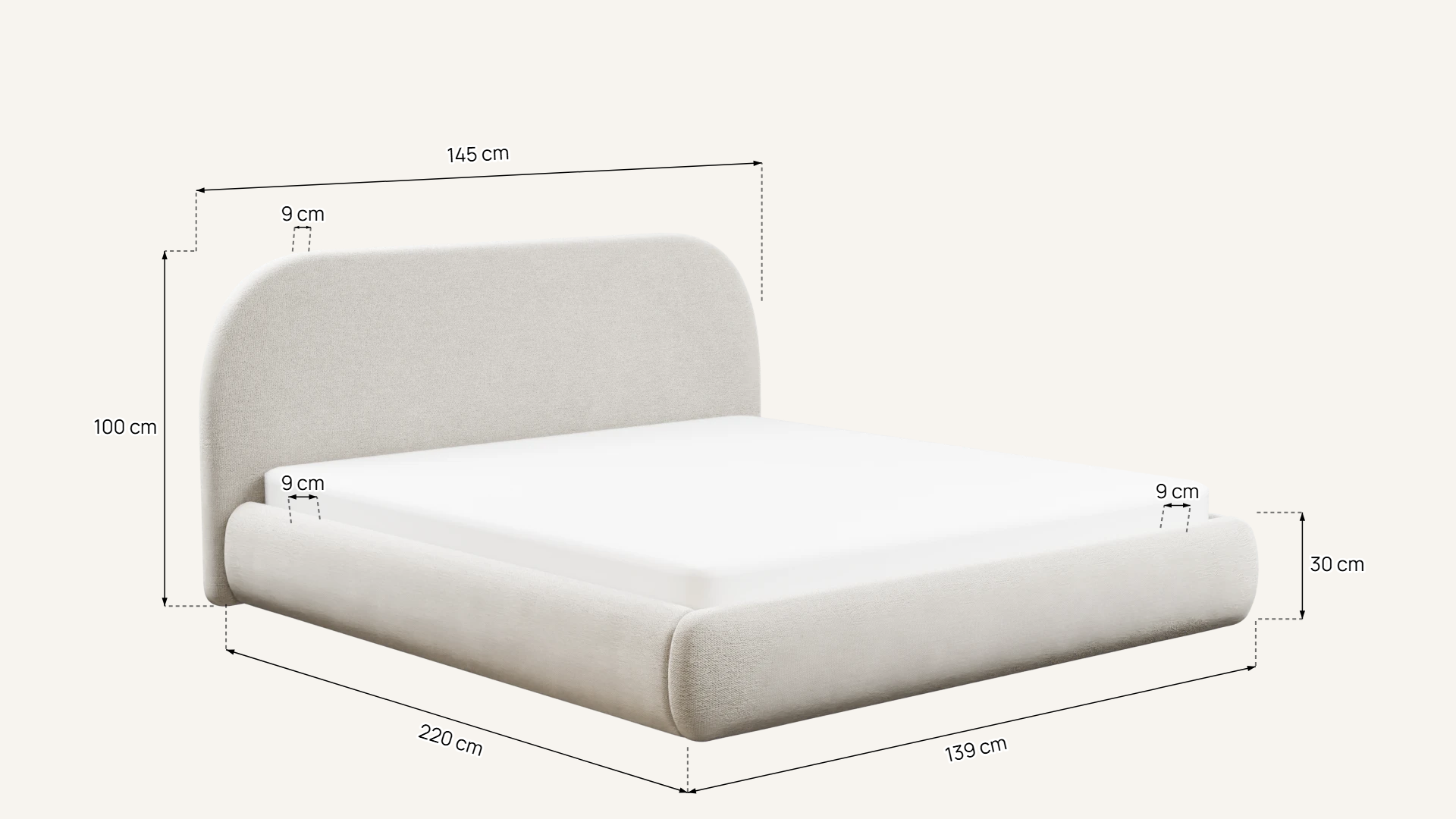
An upholstered bed with its width, length, headboard and base heights drawn on the render
Build and buy

From a spec sheet to the bed they built, sitting in the cart.

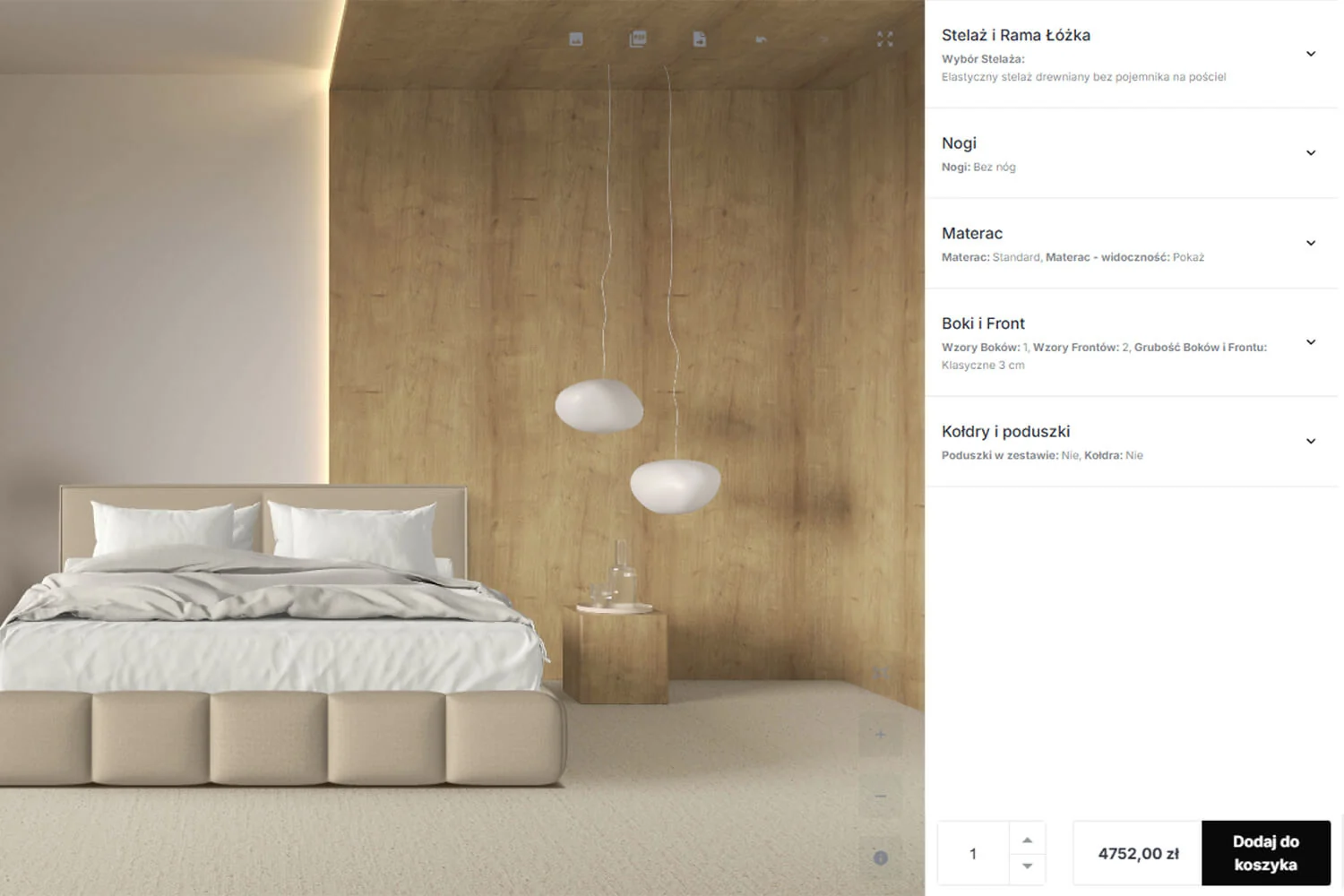
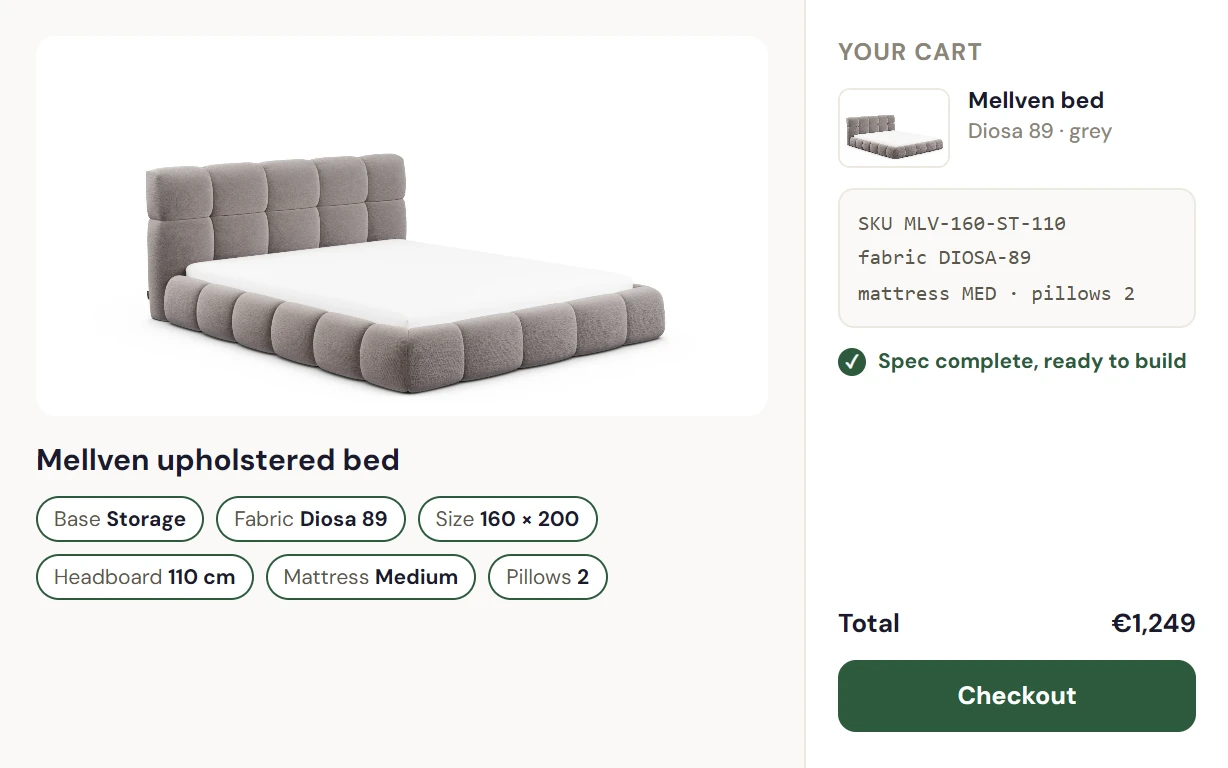
Base, fabric, size, headboard height, mattress, pillows. The buyer builds it and sees it instantly, because the render already exists. Compatibility rules only offer the combinations you can make, and the price follows every choice. What lands on your side is an order you can build, spec-complete, in the cart you already run. Not an enquiry somebody has to chase.
yourshop.com/cart
A configured Mellven bed beside a cart that already holds its full build spec, ready for checkout
Do it per market

From one storefront to every market you want to sell into.

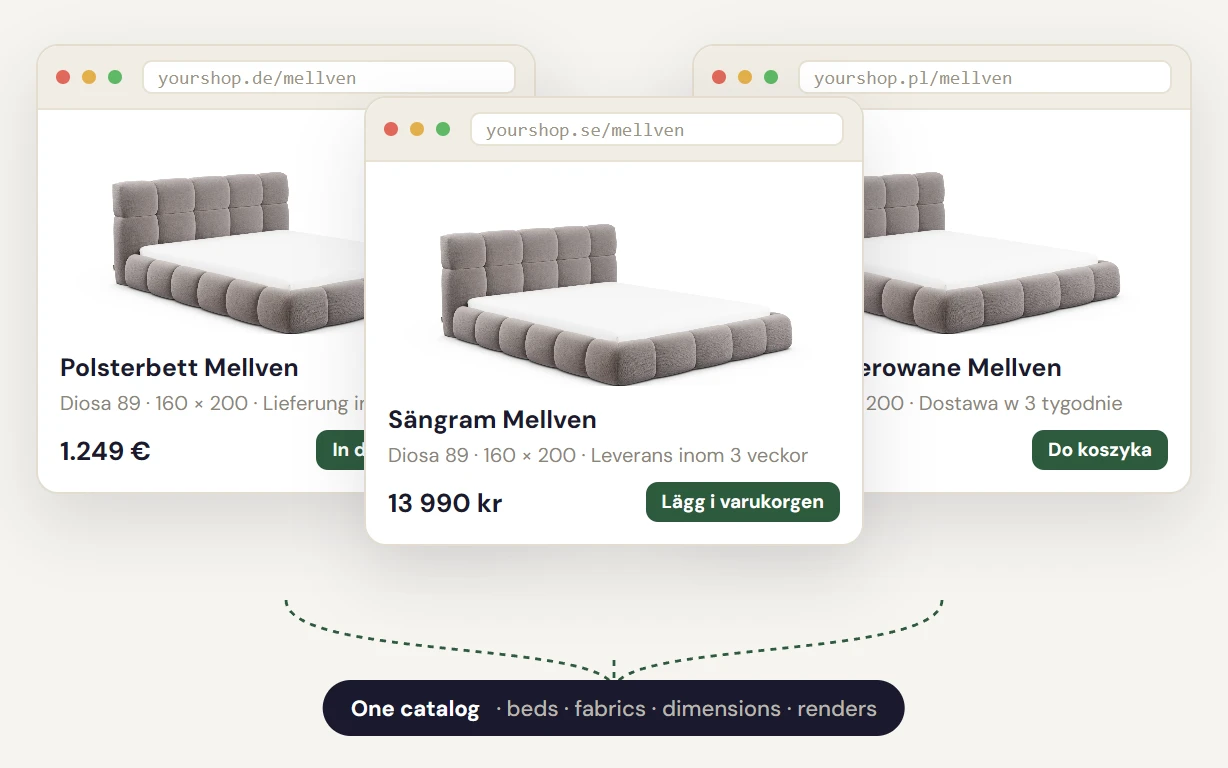
One spine holds the beds, the fabrics, the dimensions and the renders, and every storefront reads from it. You edit the bed once and it is right in every country. The next market is a translation job on a catalog you already have.

The same bed on German, Swedish and Polish storefronts, each in its own language and currency, all fed by one catalogue
More on beds

The work behind the claims on this page

FAQ

Questions bed makers actually ask

We already put a configurator on the site and it didn't move the numbers. Why would this?
Most configurators are bolted onto a cold product page and asked to do the selling. That is the wrong job for them. The build step pays off at the end of the path, for the buyer who has already chosen your bed, and it only feels instant if the visuals underneath it already exist. Get the catalog right first, then put the configurator where the decision happens.
We carry 500+ fabrics. Do we have to photograph them on every bed?
No, and you could not afford to. We build each bed as a parametric model and generate the matrix from your catalog data, so nine headboard heights cost compute rather than nine modeling jobs. Coverage is computed as a grid before anything renders, so "every combination" is a checked claim. A new fabric collection goes live as a re-render, not a photoshoot cycle. At MyBed, the in-house team adds new fabrics without us.
Won't millions of images and a configurator slow our product page down?
They don't, because nothing renders in the browser. The visuals are static images addressed by your own product and option IDs, so the store asks for a picture and gets one, at normal image speed. The configurator draws on the same finished renders. There is no 3D engine sitting on your product page waiting to load.
Do we have to replatform, or rebuild the store?
No. MyBed runs on Shoper and kept it. The visuals drop into the storefront you already have, the configurator embeds into your existing template, and the configured bed enters your native cart as a real product, so orders arrive the way they always did. We wire it to how you sell today.
What does it cost, and how do we start?
Two ways to work together: as a product your team runs, or embedded with our team through the build. Which one fits depends on the size of your catalog and how much of it is already structured. Tell us what you make and how you sell it, and we will tell you honestly whether it fits before anyone talks numbers.
120
configurators, one per bed model
542
fabrics across 21 collections, searchable in plain language
+15%
online conversion at MyBed.pl

Tell us what your bed catalog looks like. We'll tell you if it fits.

Your bases, your fabric collections, how you sell. Two fields, and we take the rest to email. No demo booking, no sales sequence. We reply by email and take it from there.

1Mvariants from one source
Same dayprice changes live in the shop
No-codeconfigurators the client runs
No demo booking, no sales sequence. We reply by email and take it from there.