Sell to new markets

You can ship to five countries. You can only sell in one.

Buyers in each market decide on different facts. Serve every country from one catalog, with the right facts leading each page.
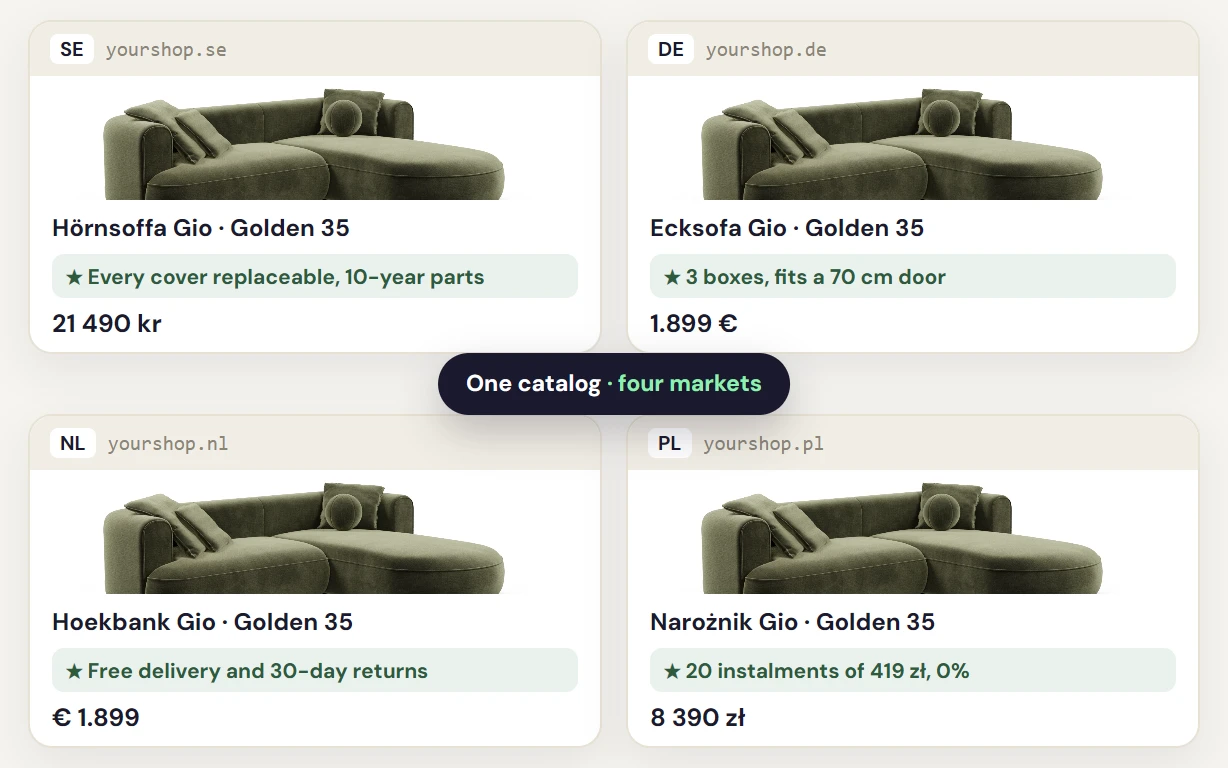

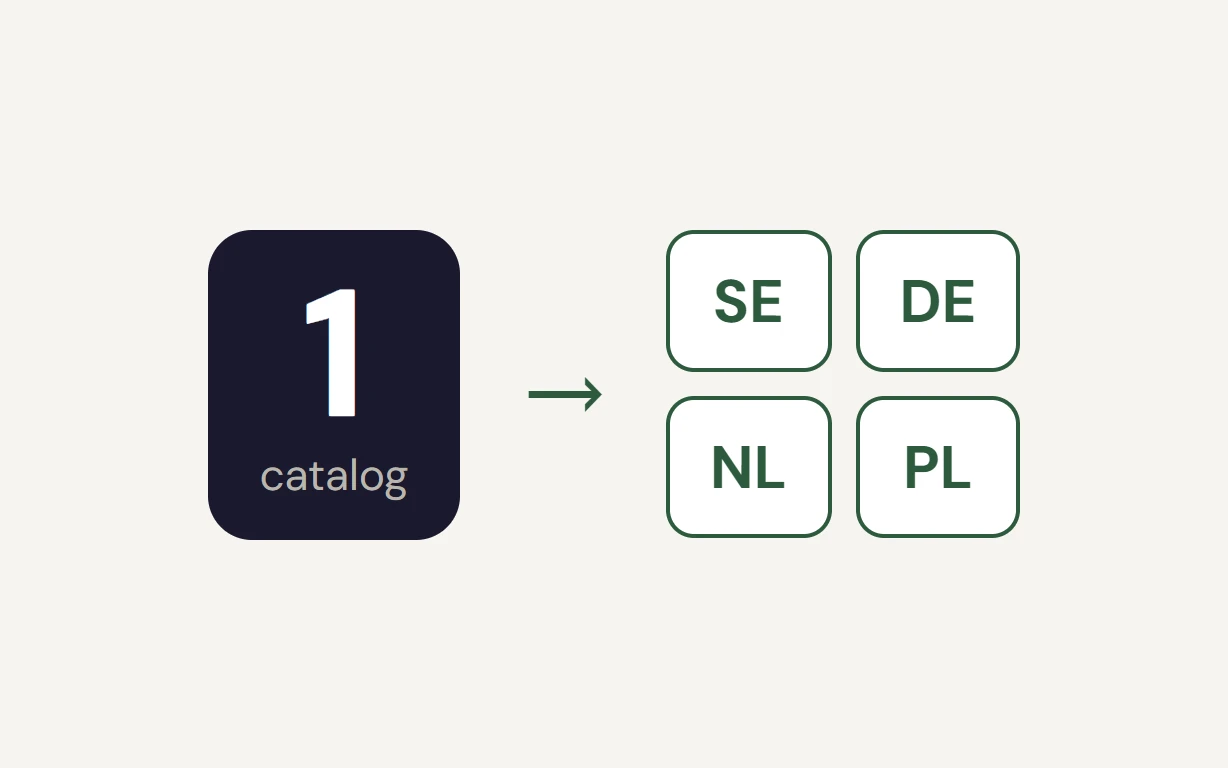
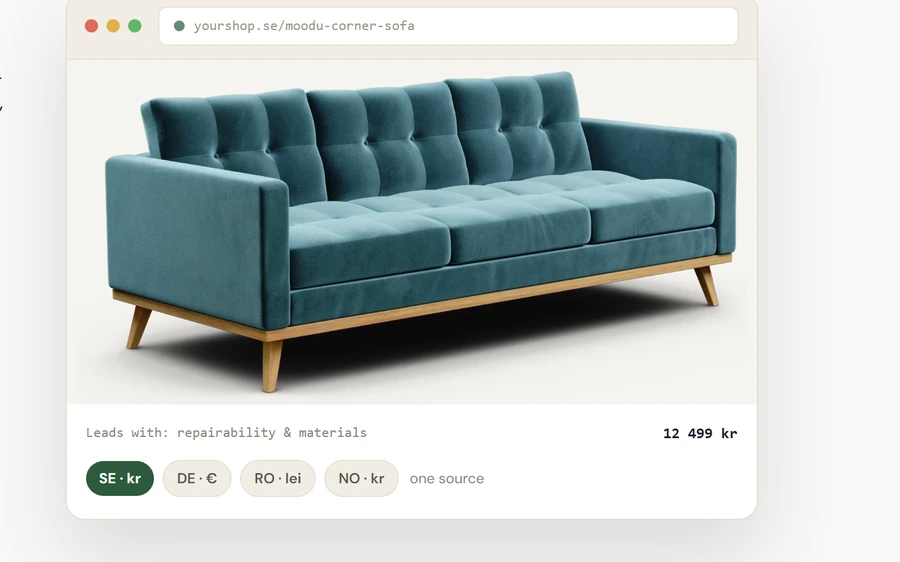
One corner sofa on Swedish, German, Dutch and Polish storefronts, each leading with the fact that sells in that market
They trusted us
The result, proven

A bed brand we work with sells into three markets from one catalog.

Poland, Germany and Austria: one brand, one platform, the same configurator on all three storefronts. The German and Austrian pages serve a single German catalog to two markets.

Opening a market was a presentation decision rather than a second shop. Content Hub is multi-tenant and multi-language by construction, so a country storefront is the same mechanism, pointed abroad.

3
market storefronts on one catalog

Poland, Germany and Austria, all live today, all running the same configurator on one shared catalog.

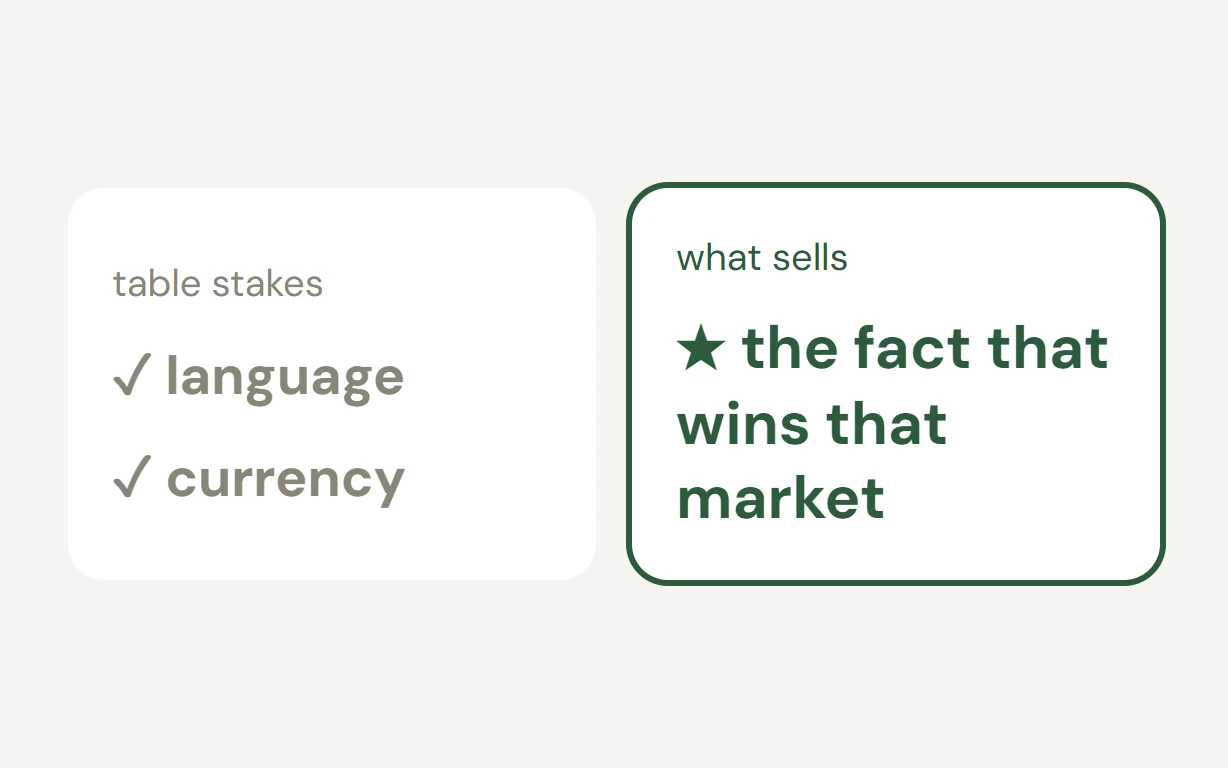
Translate the page, switch the currency, done? In Stockholm they check repairability first. In a Warsaw flat the question is whether it fits up the stairs.

Open the next market without rebuilding the shop.

Keep one catalog. Change what leads the page, per market.

Three things that changes

Enter a new market as a presentation decision

Not a rebuild.

Edit a spec once

Every country page stays correct.

Lead each page with the fact that sells there

The data does not change. The order does.

What it does

What one catalog does across your markets

One record

One catalog. Every market.

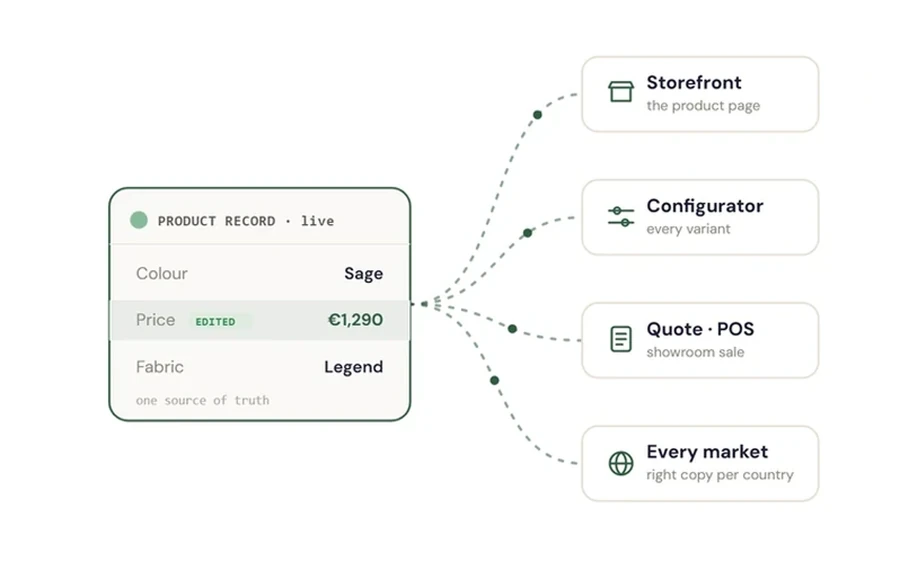
Materials, dimensions, package sizes, care, prices and images, entered once as structured data. Every country storefront reads the same record. Content Hub holds the product data once, synced from your ERP or PIM. Variant Visuals renders once, and the same visuals serve every storefront.
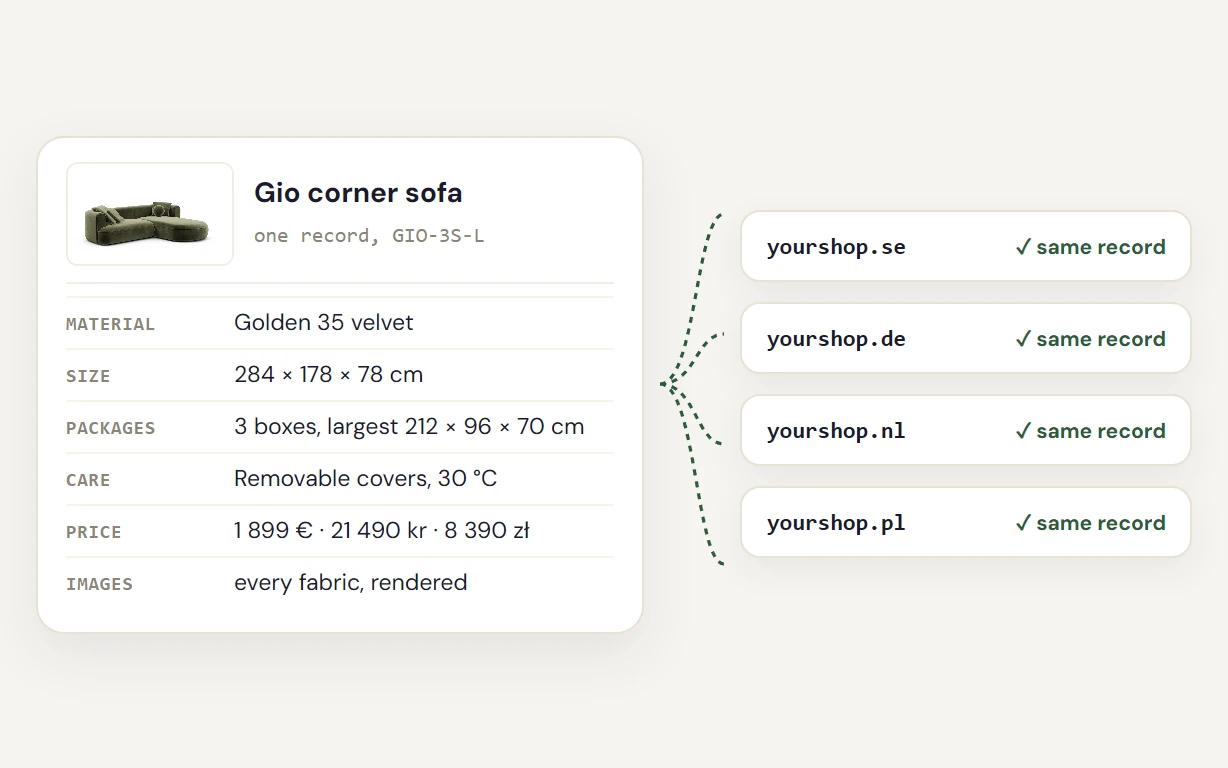
One product record, with material, size, packages, care and prices in three currencies, feeding four country storefronts
Per market

Different market, different page.

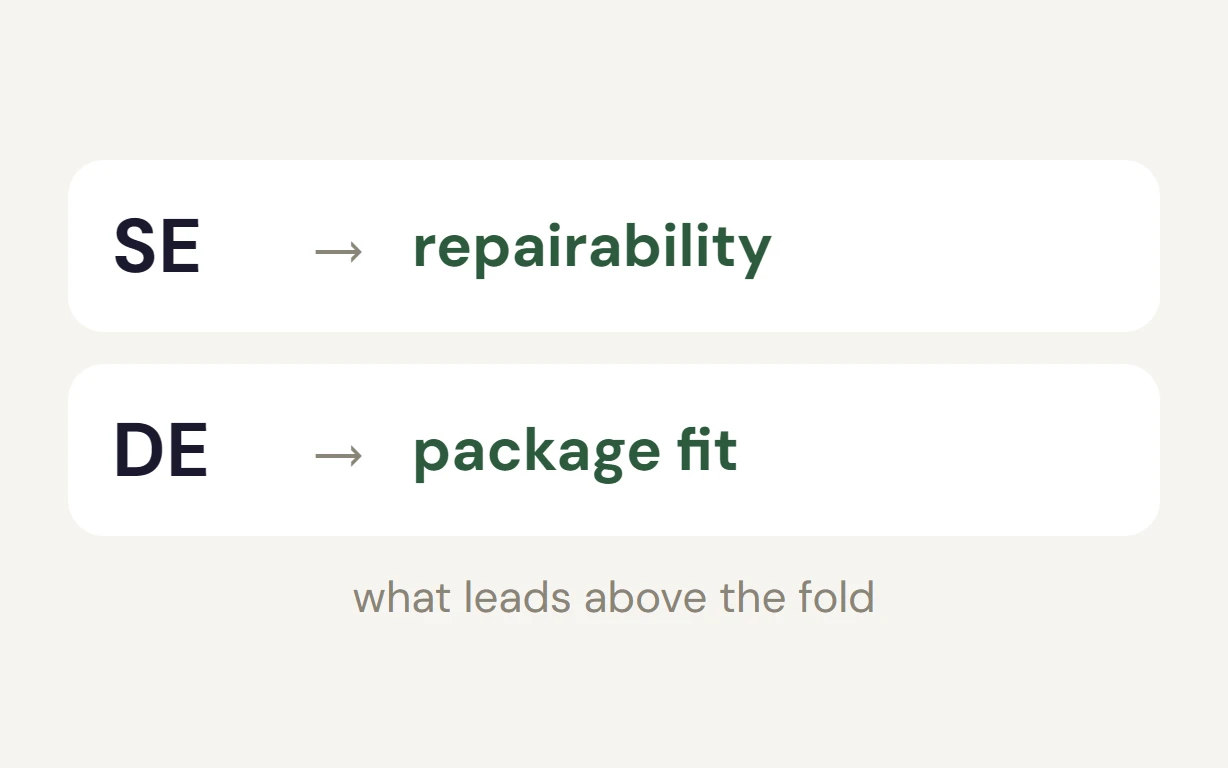
The data doesn't change. The order does. Repairability leads in Sweden; package-fit leads in apartment cities. Content Hub carries per-market presentation rules: which facts lead, per country. Modular Configurator runs on the same spine, giving a localized configure surface without a second build.
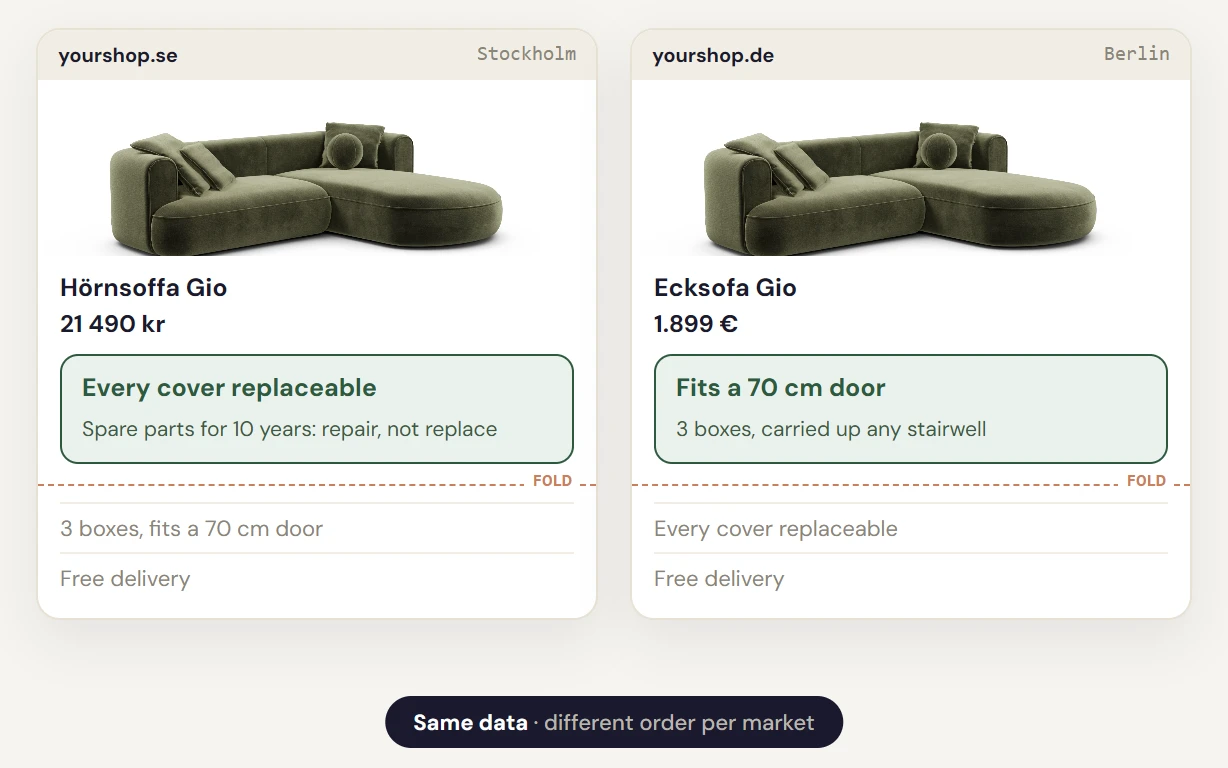
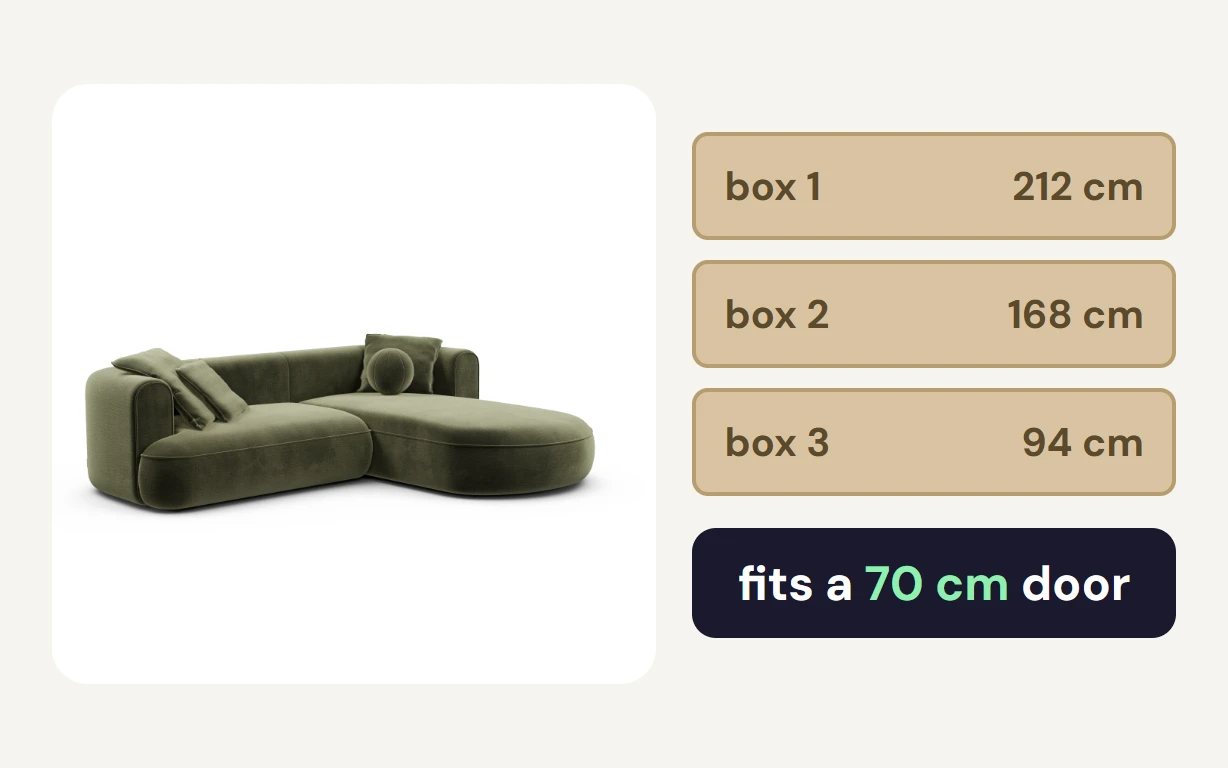
The same sofa on a Swedish and a German page: repairability leads above the fold in Stockholm, fitting a 70 cm door leads in Berlin

Same catalog, new market rules. Each page leads with what sells there, and a spec change lands everywhere at once.

We opened the German store without rebuilding anything.
What you get

6 things you get

1

One catalog, every market.

Entered once, served everywhere, synced from ERP or PIM.

2

Per-market page order.

The fact that sells there leads there.

3

Multi-language, multi-currency built in.

Locale and currency per storefront, not per rebuild.

4

Keep the stores you run.

A drop-in API per storefront: Shopify, Magento, Shoper, custom.

5

Specs can't drift.

Edit once; every country page stays correct.

6

The next market is a decision, not a project.

Presentation rules, not a new webshop.

How it holds up

Why the next market is a configuration, not a rebuild

Content Hub is multi-tenant by construction.

Organizations hold projects; every catalog, model and asset is project-scoped. Serving several storefronts from one platform is the shape it already has.

Locale and currency live on each store integration.

The platform itself runs in two languages today, and one client's German and Austrian storefronts already share a single German catalog. Adding a market configures these; it doesn't rebuild anything.

The per-market presentation method is worked out.

Which facts lead where, repairability against package-fit against practical value, served through the same API your storefront already calls.

Related resources

Related resources, from the knowledge base

One catalogue feeding four country storefronts

How Content Hub serves one catalog to many storefronts

The multi-tenant mechanics, plainly.

Sweden leads with repairability, Germany with package fit

Localizing the PDP: which facts lead where

Repairability, package-fit, practical value: matching the fold to the market.

Language and currency are table stakes; the fact that wins the market is what sells

Multi-language, multi-currency: table stakes vs what actually sells

What localization tools cover, and what they miss.

This solution drives sales for:

Furniture brands with export demand
High-variant catalogs going cross-border
Brands selling into apartment markets, where package-fit decides
Brands running separate country stores today
FAQ

Questions we actually get asked

We translated our shop and it didn't sell. Why would this work?
Translation changes the words, not the sale. Buyers in each market decide on different facts, so we change which facts lead the page, not just the language they are written in.
Do we need a separate webshop per country?
No. Keep what you run. Content Hub serves each storefront through the same API, and a country page is a presentation rule, not a build.
What do we need to bring?
Your catalog data: specs, dimensions, package sizes, care and prices per market, and translations if you have them. We structure it from there.
We're only planning one new market, not ten.
One is how it starts. The spine pays off from the first country, and your domestic pages stay correct from the same source.
What does it cost, and how do we start?
Tell us your markets and your store setup. We scope from there: the first market proves it, the next ones reuse the spine.
1 catalog
every market
5 days
to open the latest market
Rules
not rebuild projects

Tell us which markets you're after. We'll show you the page each one needs.

Your catalog and your target countries. Two fields, and we take the rest to email. No demo booking, no sales sequence. We reply by email.
1Mvariants from one source
Same dayprice changes live in the shop
No-codeconfigurators the client runs
No demo booking, no sales sequence. We reply by email and take it from there.