They typed "cozy grey velvet". Your store showed them nothing.
Buyers describe what they want the way they'd tell a salesperson. Give them a search box that understands the sentence, and answers with the products you actually sell.
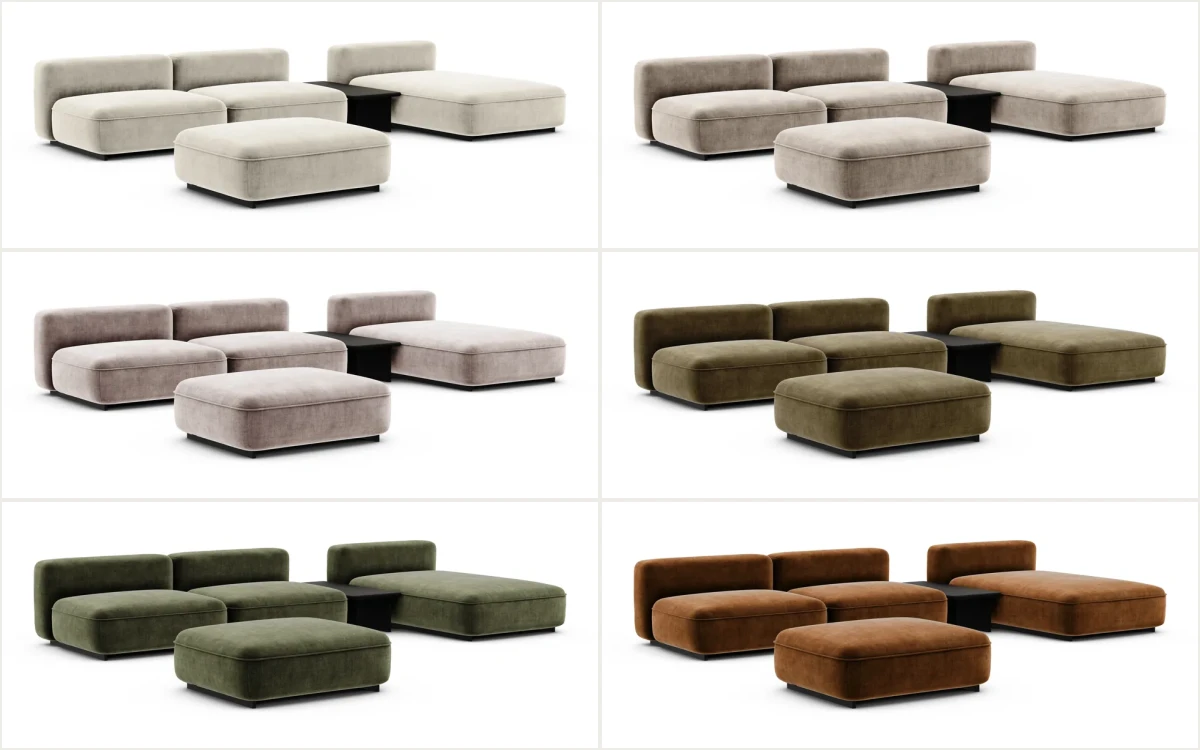
We built this for MyBed: buyers ask for a fabric in their own words and the right ones come back, from a range no filter list could make browsable.
Live in production since August 2026, answering real buyer Polish every day.
542
fabrics, searched in one sentence
MyBed's full range across 21 collections, found by phrases like "soft grey velvet for a hotel". (Source: MyBed deployment.)
Your buyer knows the look they want. "Cozy." "Like linen." "Warm autumn tones." Your filters offer material and price. Your keyword search needs the buyer's words to appear in your product data, and "linen look" is nowhere in "polypropylene, 300 g". So they scroll a grid of hundreds, and most quit before they find it.
Turn "I'll know it when I see it" into a sale.
Put a salesperson's understanding in the search box
Three things that changes
Let buyers search the way they talk
Mood, reference, vibe, in their own language.
Return only real products
The engine picks from your catalog, so an invented result is impossible.
Show the find on the piece
The exact variant, rendered, before they pay.
What it does
What a search that understands does for your store
Understand
The sentence gets understood. The math does the ranking.
The AI reads the buyer's sentence and turns it into a plan: what must be true, what would be nice, which colour, what to sort by. Then plain code scores every item in your catalog against that plan.
No black box. Every result can be traced to the points that put it there, query by query.
AI Search understands intent, then ranks deterministically: auditable math, never model whim.
Content Hub is the live catalog it reads: one source of truth, no second copy to drift.
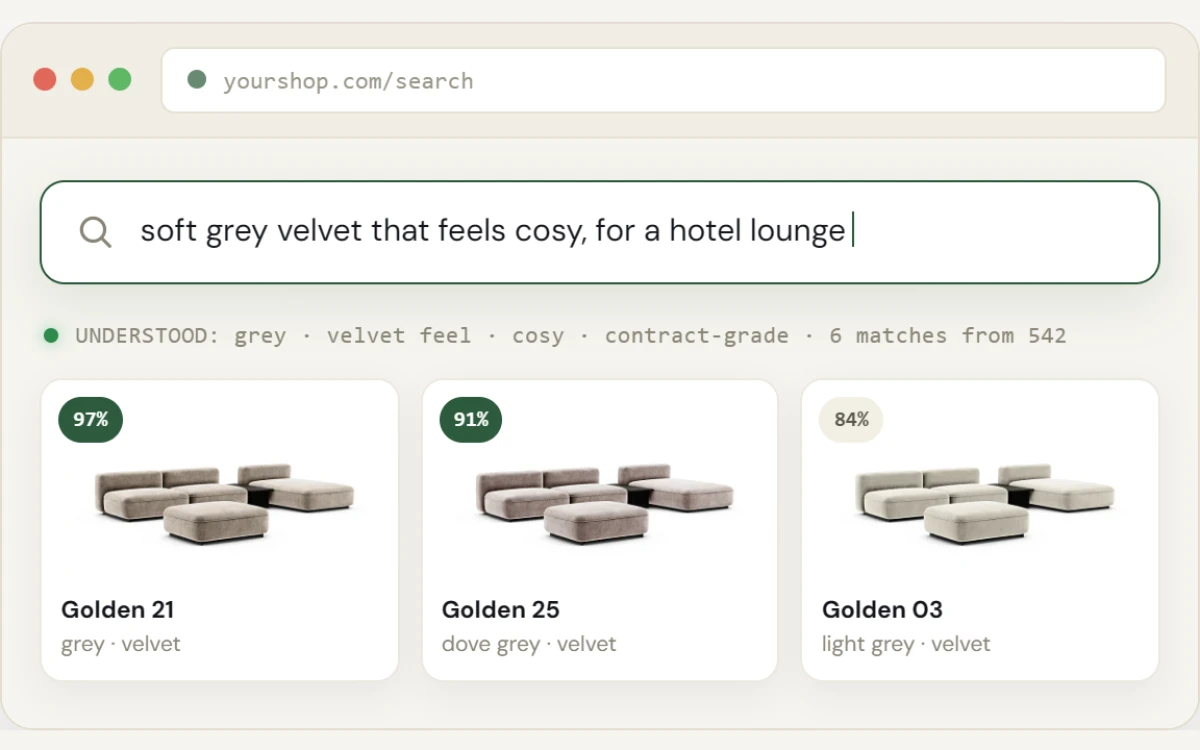
yourshop.com/search?explain
PLAN, READ FROM THE SENTENCE
mustvelvet
mustcontract-grade
colourgrey family
nicesoft, cosy handle
RANKED BY PLAIN CODE, POINTS SHOWN
Golden 21 · grey velvet
velvet +30contract +25grey +30soft +12
0
Golden 25 · dove grey velvet
velvet +30contract +25grey +24soft +12
0
Golden 03 · light grey velvet
velvet +30contract +25grey +17soft +12
0
Show
The buyer sees the exact thing they asked for
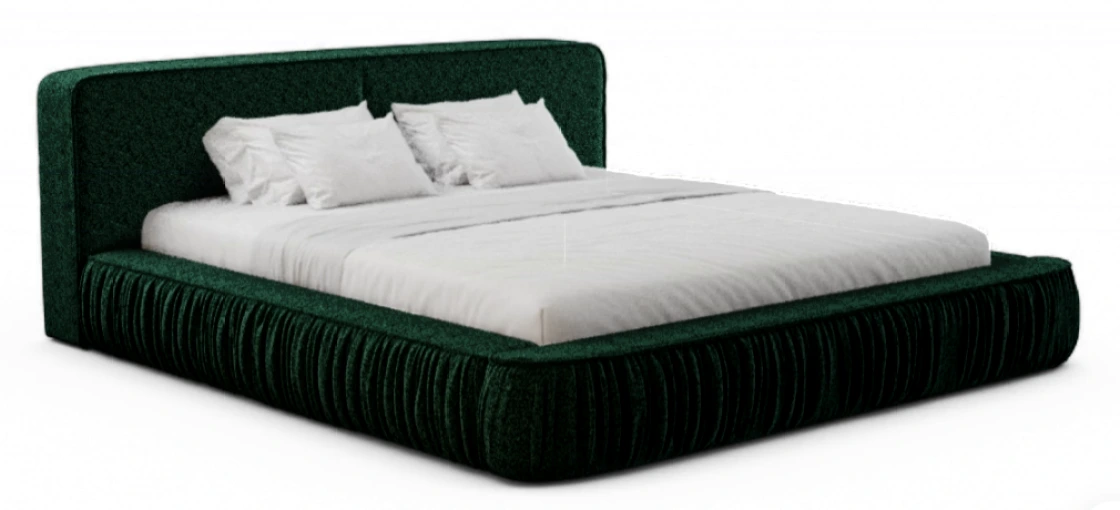
Finding is half the sale. A buyer who typed "dark green weave, tall headboard" wants to see that bed, in that fabric.
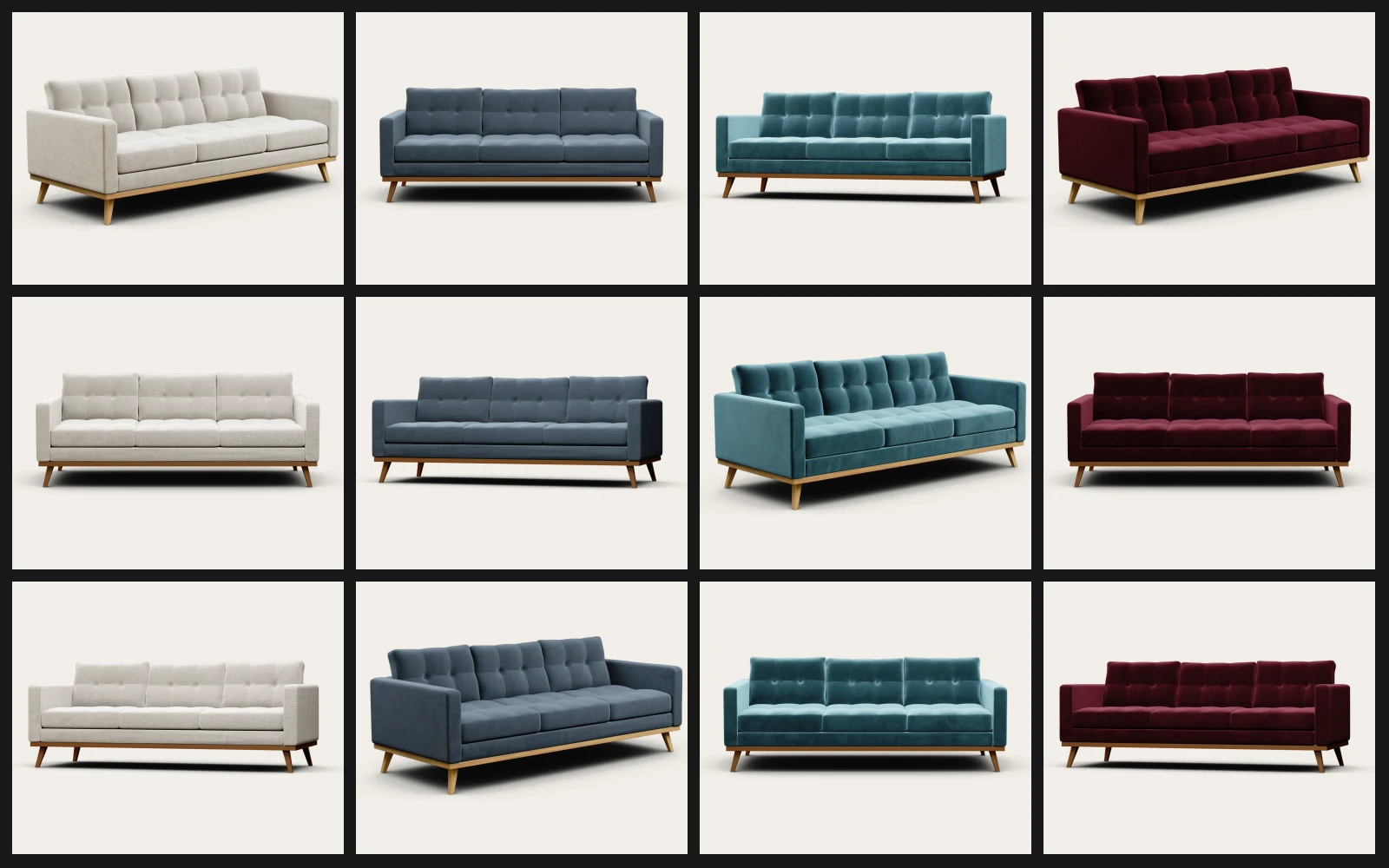
With the variant matrix prerendered, the exact combination is already an image, so the find appears at page speed.
Variant Visuals prerenders every variant, so there is nothing to render when the buyer arrives.
yourshop.com/search
✓dark green✓woven melange✓tall headboard
Prerendered variant · loads at page speed
Learn
The search log reads demand you can act on
Searched-but-not-found and searched-but-not-bought are gaps with names on them: the fabric everyone asks for and nobody buys, the phrase your catalog has no answer to. Your people tag the catalog and watch results move.
yourshop.com/admin/search-log
Search log · last 30 days1,284 searches
Searched, not found
"nubby, survives a dog"64
"linen look but washable"41
"hotel grade, anthracite"27
"warm autumn tones"19
Searched, not bought
Golden 56 · 212 views1%
Corbett 78 · 168 views2%
Storm 05 · 131 views3%
Golden 21 · 96 views6%
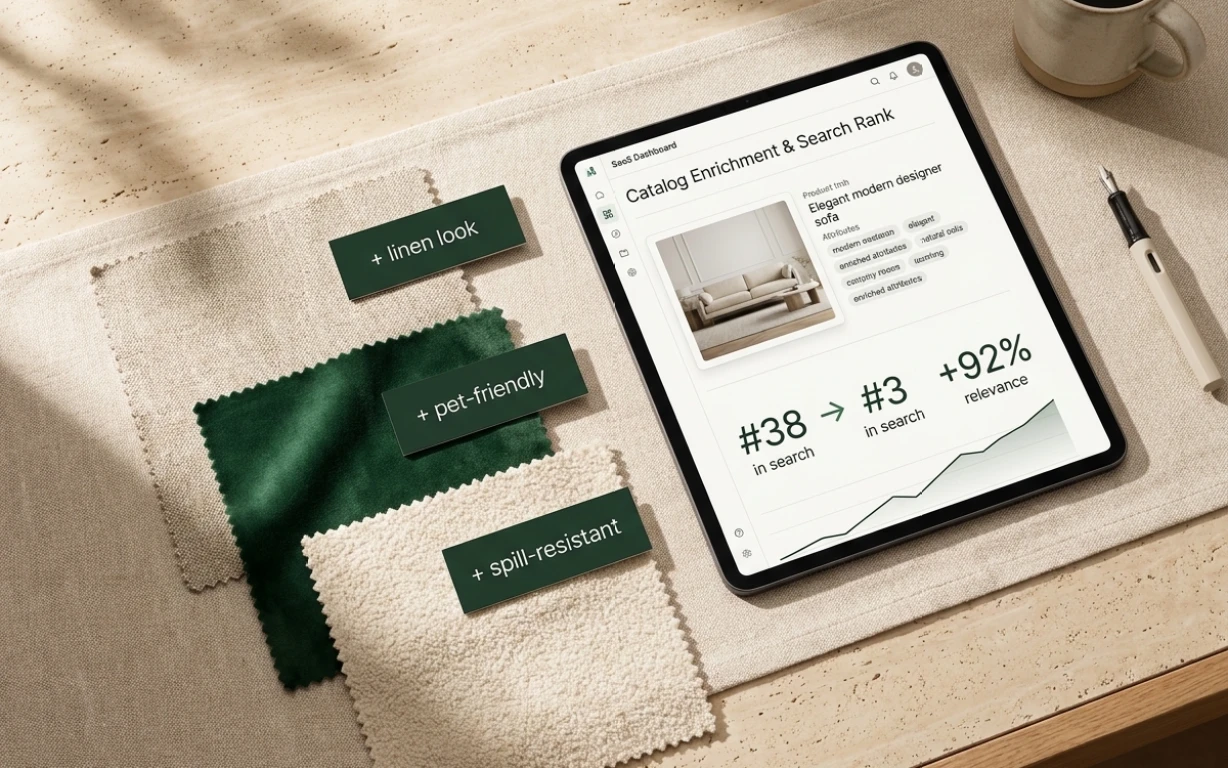
+ tag"pet-friendly" added to 14 bouclé fabrics → "survives a dog" now finds 14
Type the sentence, get the right products, see the exact variant. The buyer who knew what they wanted finally gets to say it.
The search box answers like our best salesperson.
What you get
6 things you get
1
Search in the buyer's own words
Mood, reference, vibe: "cozy", "like linen", "for a hotel", in their language, no collection names needed.
2
Only real products, ever
The engine picks from your catalog IDs. An invented product is impossible by design.
3
The find, shown on the piece
Paired with prerendered variant visuals, the buyer sees the exact combination they asked for.
4
AI spend tied to real shopping
Hostile and off-topic queries are blocked before the expensive model runs, and rate limits cap volume abuse.
5
Demand data you can act on
Searched-but-not-found and searched-but-not-bought are gaps with names on them.
6
Ranking levers your team owns
Your people tag the catalog and watch results move; every result is auditable, query by query.
Flagship · case-linked
“
Our customers don't know our collection names. They know 'soft grey velvet'. Now they type that, and the right fabrics come back.
Dominik Tomaszczyk
MyBed.pl
Challenge
Put 542 fabrics across 21 collections within reach of a buyer who searches in plain Polish, on a store where paid traffic was already arriving.
Solution / Results
Live in production since August 2026, answering real buyer queries every day.
Understands intent before it ranks: "for a hotel" applies commercial-grade rules; "hotel style" only shapes the look.
Match quality climbed from 53% to 78% on an eval built from 77 real buyer questions.
Thin data searches badly, and enriching it is part of the job.
FAQ
Questions we actually get asked
We already have filters and a search bar. What does this add?
Filters catch what a buyer can name in your catalog's terms. Most buyers describe a look or a feeling instead, and your filter list has no row for it. This reads the sentence and answers with the products that match it.
Can it embarrass us, invent products, or get talked into nonsense?
It can only return items from your catalog, by ID, so a made-up product is impossible by design. Hostile and off-topic queries are blocked before the expensive model runs.
How much work is this for our team?
You bring the catalog; we wire the engine to it and tune it to your language and range.
Our product data is thin. Will this still work?
Honestly: the data is the ceiling. Supplier specs say what a product is; buyers search for what it looks and feels like. Enriching the catalog is part of the job, and we say so before we start.
What does it cost, and how do we start?
Send us your catalog and twenty real customer questions, the things buyers ask your support or your floor staff. We scope from there.
<10
seconds to an answer in plain language
~50
fabric parameters scored per question
2.2M
prerendered visuals the results show
Tell us what your buyers type. We'll show you what they should be finding.
Two fields, then it's an email thread with the people who built it. No demo sequence, no drip campaign. We reply by email.
1Mvariants from one source
Same dayprice changes live in the shop
No-codeconfigurators the client runs
Thank you
Your message is on its way. We will reply by email.