Understanding furniture conversion
Most furniture shoppers start their journey the same way: scrolling through endless sofa designs, fabrics, and color finishes online. But the final decision often happens in the showroom, surrounded by real textures and real dimensions. The challenge By the time they step into the store, most customers have forgotten what they configured online. That’s where many sales opportunities quietly die.
Furniture conversion is about closing that gap. It’s not just about selling a product - it’s about helping a customer finish the journey they began online. When the digital experience continues seamlessly into the showroom, closing the sale becomes natural. That’s what showroom continuity is about.
The hidden disconnect in the customer journey
Customers don’t buy large furniture impulsively. The path isn’t linear anymore: it goes online, in-store, back online, and maybe back to the showroom again. Traditional showroom systems often treat each of those steps as separate experiences. As a result, the customer ends up restarting their journey each time.
Imagine a buyer who spent an evening perfecting their dream sectional sofa - size, fabric, leg finish, pillows. The next day, in the showroom, the salesperson asks, “Which fabric did you choose online?” Blank stare. That uncertainty leads to hesitation, and hesitation kills conversion.
This disconnect isn’t rare. Many brands still treat their e-commerce site as a catalog and the showroom as a separate world. Without synchronization, even the most inspired shoppers lose momentum. The key is creating one continuous thread across every touchpoint so the customer’s saved choices follow them anywhere.
Technologies that bridge online and in-store channels
So how do we fix it The most successful furniture retailers use three main technologies: interactive configurators, augmented reality tools, and automated visuals. Each one plays a different role in building confidence and connection.
Interactive online configurators
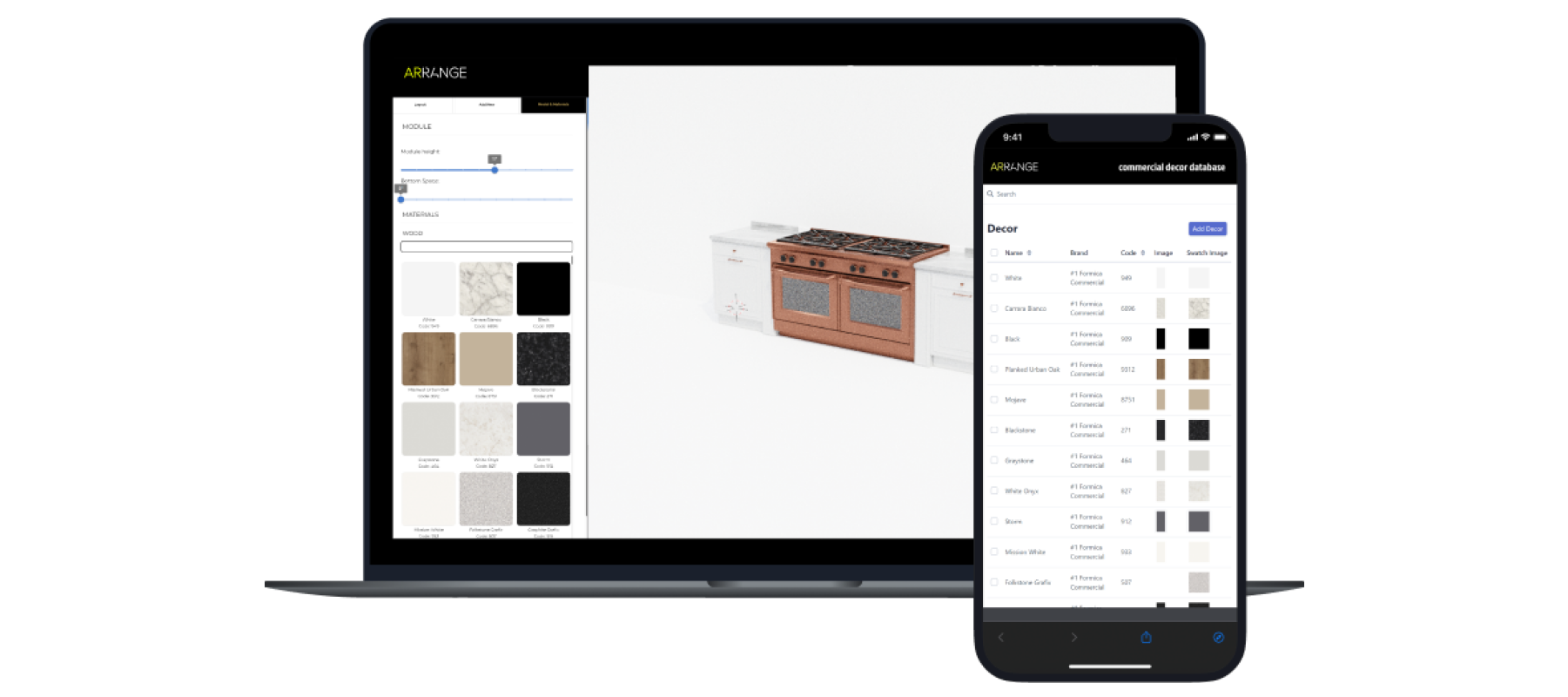
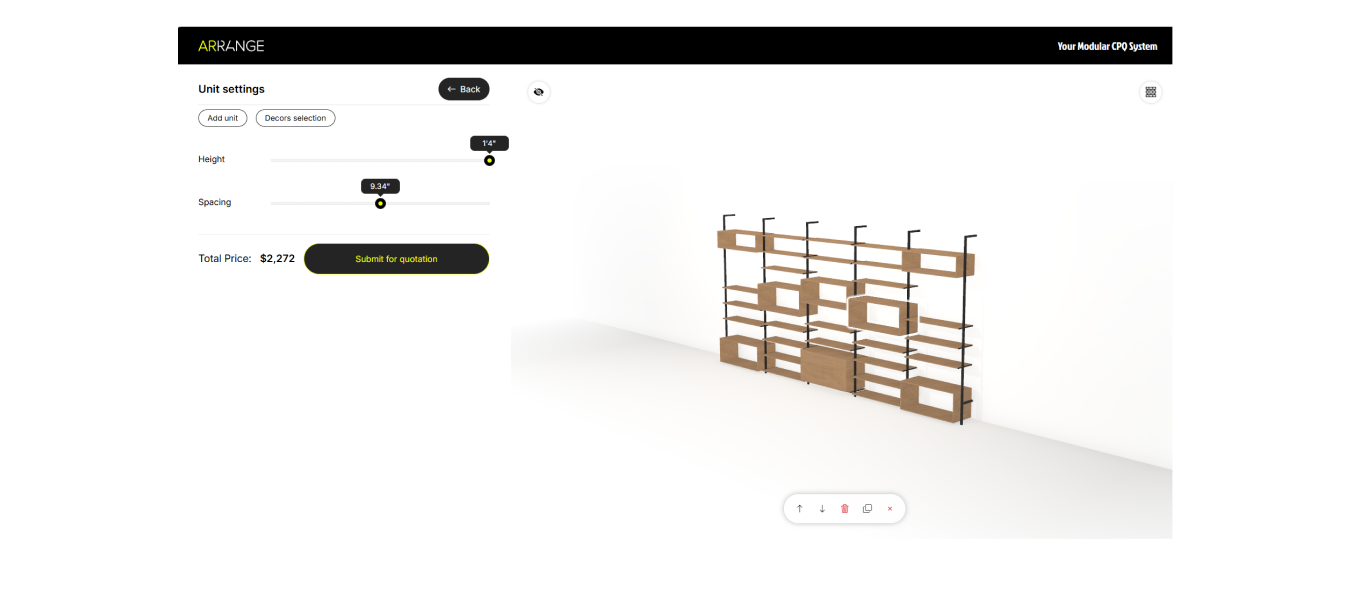
An interactive configurator turns browsing into participation. Instead of flipping through static product photos, customers create their furniture piece in real time. Shape, material, dimensions - everything updates instantly. This builds what’s called emotional investment. When someone personally designs a product, they are more likely to buy it.
That’s why our Custom 3D Product Configurator is central to so many brand strategies. It ensures every variation a customer builds online can be recalled later in the showroom. The piece they customized isn’t just a memory - it’s a link waiting to be reopened by the sales rep.
Augmented reality (AR) integration
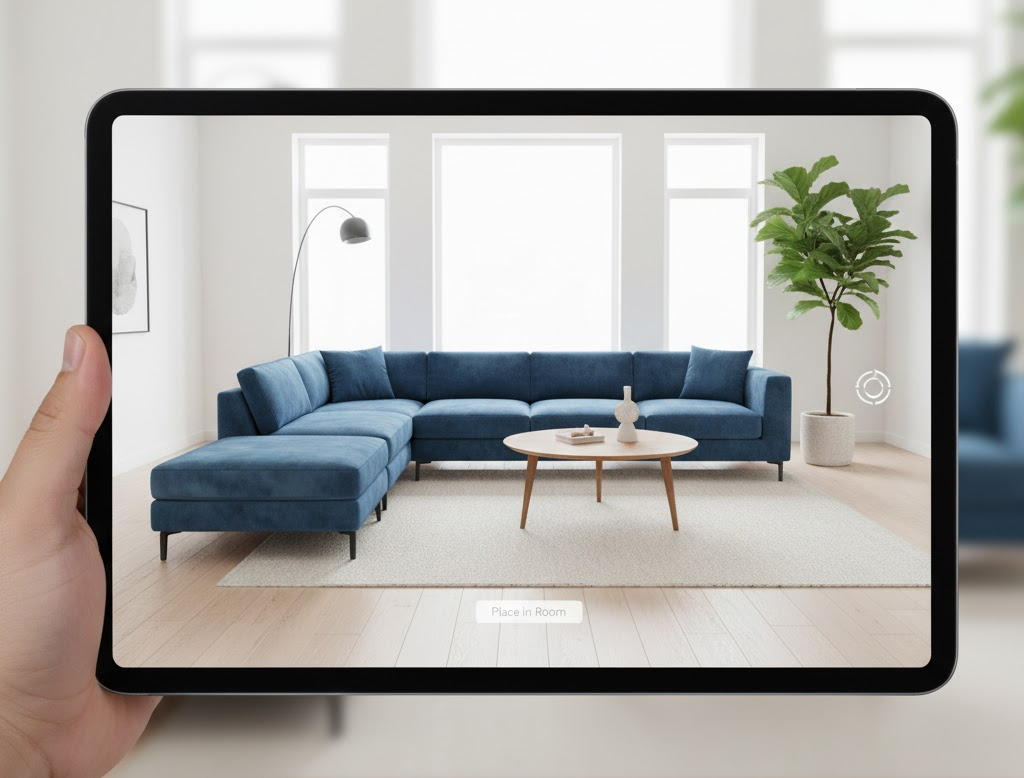
AR adds another layer of certainty. When customers see the sofa or dining set placed in their actual living room through their phone screen, they stop guessing about size or fit. This removes friction from the decision-making process. In short, AR eliminates that tiny “what if it doesn’t look right” doubt that stops a purchase.
Automated visuals with photoreal renders
It’s one thing to click through fabric swatches, another to see exactly how they will look together. Automated, AI-driven visuals produce photorealistic renders for every variant without the manual cost of studio photography. This ensures that whether online or in-store, the customer always sees a trustworthy representation of their final product.
When these visuals sync with a product information system or centralized data model, the same render is visible everywhere - on the website, in the showroom configurator, in the digital quote, and even in after-sales documentation.
Uniting digital tools and showroom reality
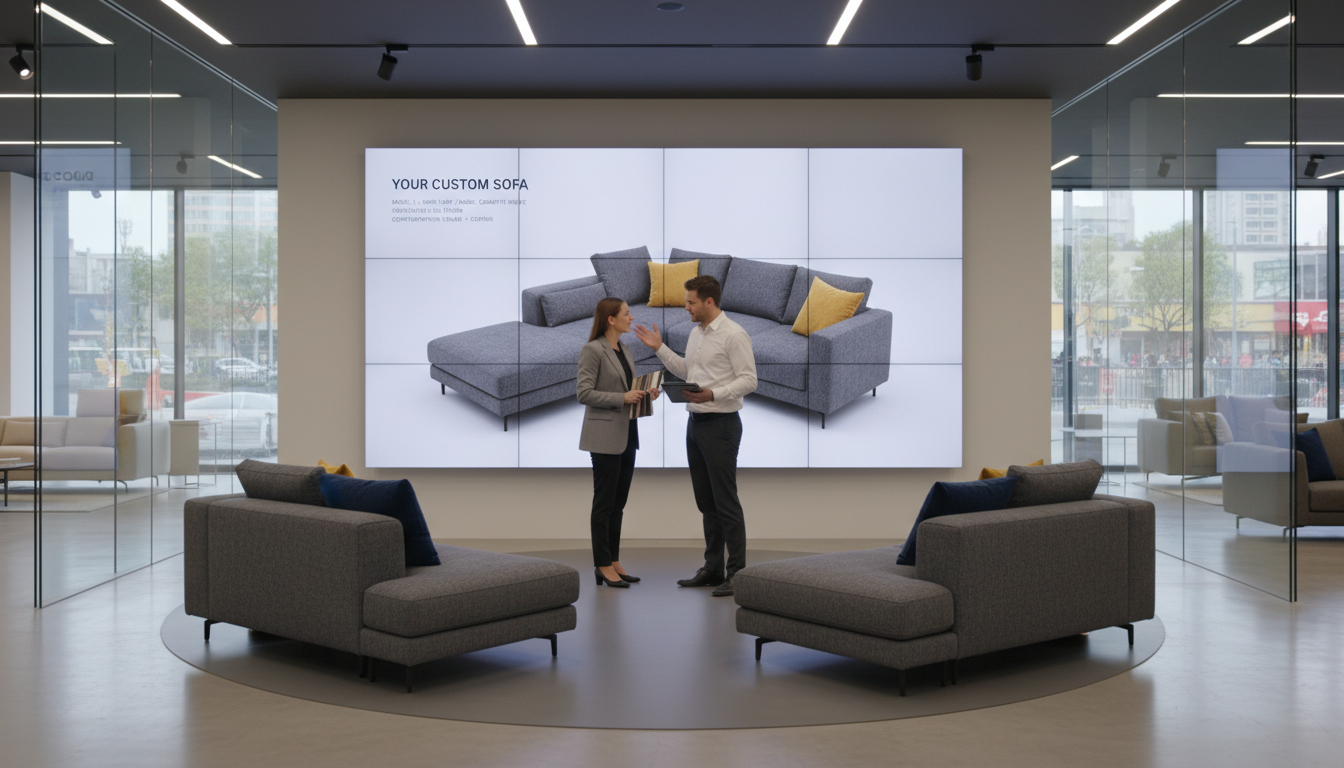
True showroom continuity happens when all these tools talk to each other. Paradise Grills is a perfect example. Their POS Software and Sale Documents Automation connects their online 3D configurator with the in-store POS system. A customer can design an outdoor kitchen at home and walk into the store the next day. The salesperson simply opens their saved configuration on the showroom screen.
For upholstered beds the showroom is the last of four stages, and our bed configurator page shows what the buyer should meet before they arrive.
That same design automatically feeds into the quote and even the sales contract. Nothing needs to be re-entered. That’s what reduces errors, speeds up closing, and makes customers feel like the brand truly remembers them.
Centralized data systems are the unsung heroes here. A single source of truth (SSoT) ensures one version of every product’s information flows consistently through all touchpoints. Research backs this up: in the Furniturebox case study: centralized data enabling global e-commerce, the brand saw reduced errors, faster quoting, and higher conversions after implementing such a setup.
If you’re curious about how to apply this thinking to your brand, explore our guide on Sales Strategy with Showroom Configurator. It lays out how retailers can design showrooms that feel connected to the digital experience - not separate from it.
Avoiding pitfalls and achieving high conversion rates
Most guides will tell you to just “connect your systems.” In reality, this is where many brands hit walls. Integrations that look simple on paper often fail when data versions don’t match. I’ve seen teams launch beautiful showroom apps that display old prices or missing materials simply because their data wasn’t synced right.
The most common pitfalls are:
- Separate databases for showroom POS and online store
- Manual re-entry of configurations or pricing
- Outdated visuals that confuse customers
- Inconsistent product naming and variant data
The solution is adopting a genuine SSoT - one master record accessible through APIs and event-driven updates. With it, every system (online store, in-store configurator, POS, and mobile app) reads from the same live data. The difference in conversion metrics is measurable. Brands implementing this have reported conversion increases of 10–20% and return rate drops of up to 25%.
Data alignment is more than a tech fix. It’s an emotional one. When a customer feels known - when their saved sofa appears within seconds in the store - the sale feels natural. Confidence converts.
If you want to go deeper into how product personalization affects that emotional link, see our Personalization Strategy for Furniture Brands. It shows how to structure configurator complexity so customers stay engaged instead of overwhelmed.
Practical steps for furniture retailers
We all want higher conversions, but the path there starts with smaller, structured steps. Here’s what works in practice:
- Map your customer journey - Identify where most drop-offs happen between online browsing and in-store consultation.
- Implement an online configurator - Make it visually powerful and emotionally intuitive.
- Create real continuity - Enable the customer’s saved configuration to be recalled in the showroom with just a reference code or scanned QR.
- Build around a single source of truth - Centralize product, pricing, and visual data to ensure every touchpoint shows the exact same content.
- Train your sales staff - Teach them that technology isn’t replacing their role - it’s reinforcing it.
Digital transformation isn’t about flashy tech. It’s about making the customer feel seen every step of the way. When their digital dream couch follows them into the real showroom, the sale isn’t a closing act - it’s a continuation.
That’s real furniture conversion.