1. What Is Parametric Configuration and How Does It Work?
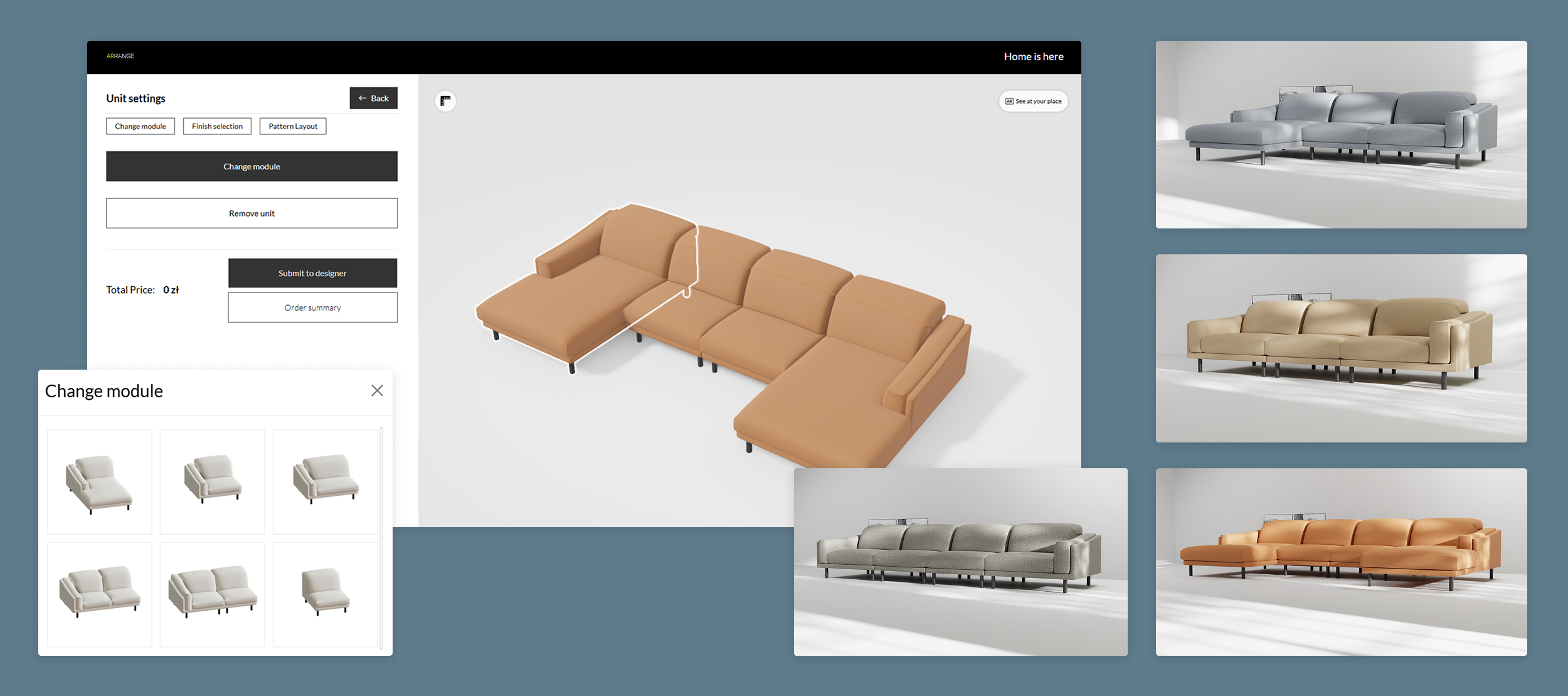
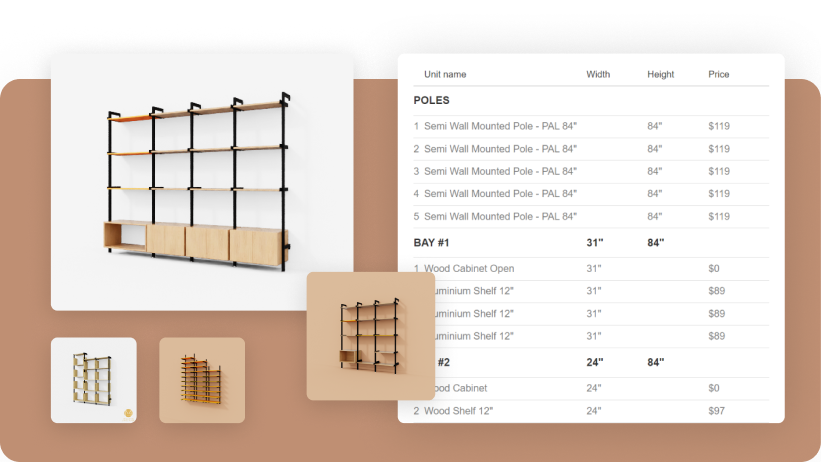
To put it simple – parametric configuration is a system that generates 3D product models based on user-defined inputs like width, height, layout, or materials.
Instead of manually designing every product variant, you define the logic once. The configurator automatically generates valid designs from parameters, and every change updates the model and pricing in real time. Different parts of the product automatically adapt to each other as parameters change, just like CAD modelling, but built for the customer’s buying experience rather than for engineers.
This means:
- Customers see accurate 3D previews as they configure
- Logic constraints (e.g., spacing, module limits, joinery rules) are enforced
- No invalid combinations or design errors slip through
Parametric configuration isn’t just faster. It’s smarter.
But let’s Talk About You First
Whether you’re a designer juggling client requests or a brand owner frustrated by slow quoting, production errors, or inconsistent visuals, you’re not alone.
Maybe you’re spending hours building 3D mockups manually. Maybe you’re fielding customer questions your website should already answer. Or perhaps your product is highly customizable, but your sales process doesn’t reflect that flexibility. Sound familiar
That’s where parametric configuration comes in. Not just as a design tool, but as a real-time solution to accelerate quoting, improve visuals, and simplify personalized selling.
Let’s break it down.
2. Is Parametric Configuration Right for Your Business
If your product line is:
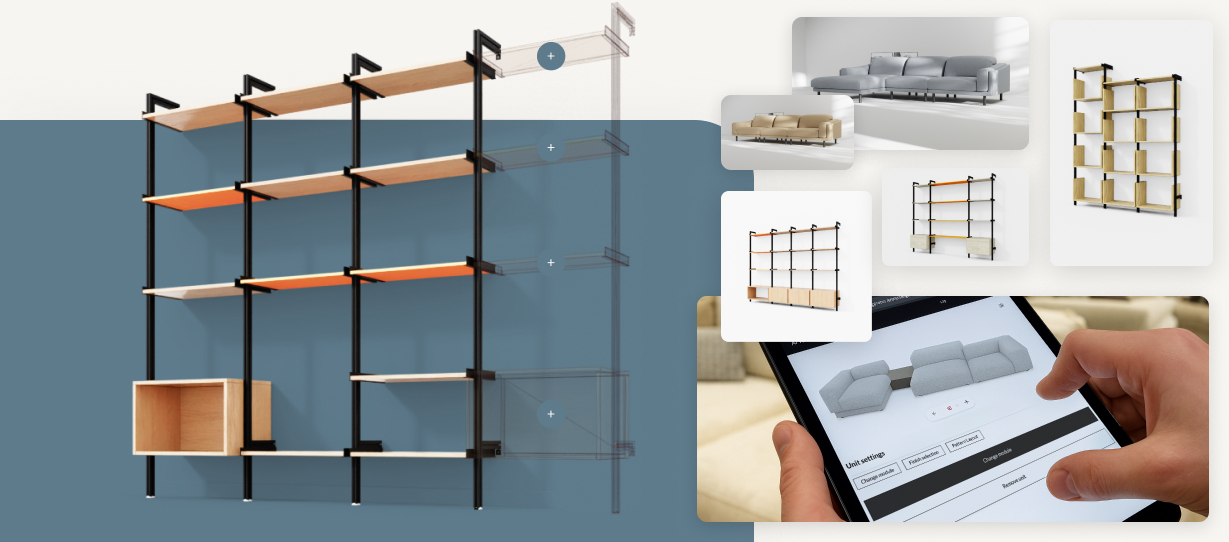
- Modular (sofas, shelving, wardrobes)
- Made-to-measure (kitchens, closets, tables)
- Layout-dependent (office furniture, custom storage)
…then yes. Parametric configuration is designed for you.
It’s not ideal for:
- Mass-produced, non-configurable products
- One-off artisanal designs with no logical structure
- Single products that come in a variety of finishes (like beds, non-modular sofas - those should be addressed with Ar-range Variant Visuals system)
It shines when there are too many options to manage manually, and when quoting speed, production accuracy, and visual clarity are critical to winning deals.
If you need help deciding what kind of configuration system is right for you, take a look at Difference Between 3D Configurator and Variant Visuals article
3. Will a Parametric Configurator Address 100% of User Questions?
No tool can replace a great sales process. But a parametric configurator comes close - if it’s designed right.
A well-implemented configurator answers most of the common questions customers have during their decision process:
- “What will it look like in my space?” - Solved with photorealistic visuals and AR preview links.
- “Will this fit?” - Solved with logic-based dimensioning and layout validation.
- “How much will it cost?” - Solved with real-time price updates and clear breakdowns.
- “Can I change my mind later?” - Solved with links to return and edit the configuration.
- “Can I see this fabric in real life?” - Solved with direct links or QR codes to order samples.
- “What’s the next step?” - Solved with simple, branded instructions in the quote itself.
But here’s the key: the quote isn’t just a summary - it’s a sales asset.
That’s why we design every quote to:
- Reinforce your brand and unique value proposition
- Include visuals that truly reflect the configured product
- Link to next actions: order, contact, modify, explore further
If your configurator doesn’t turn curiosity into clarity and momentum, it’s not doing its job.
Automate 80% to better serve the remaining 20%
In most made-to-measure furniture businesses, the majority of inquiries fall into repeatable patterns. With a properly set up parametric configurator, up to 80% of customer needs (layout, size, finishes, pricing) can be addressed instantly, without human involvement.
This frees up your design and sales team to focus where their time really counts: the remaining 20% of high-touch, high-ticket projects.
Think about a modular shelving brand. Many of its customers are happy to configure their shelving system themselves. But some want a custom layout that integrates lighting, architectural details, or storage planning help. Those customers don’t want to be rushed. They want attention. And now, thanks to automation, your team has time to give it to them.
By eliminating back-and-forth quoting for routine orders, you preserve bandwidth for higher-margin work - and improve the quality of service across the board.
4. Can a Parametric Configurator Leverage AI to Guide Customers
Yes. And when it does, the experience transforms from self-service to guided selling.
By layering AI on top of your configurator’s rule-based logic, you can:
- Suggest relevant layouts or modules based on user input (e.g. wall size, storage type, style)
- Provide smart defaults that reduce choice overload
- Use chat-like interfaces to guide users through complex setups without clicking through menus
- Recommend upgrades or add-ons based on configuration context
This isn’t just about automation, it’s about giving customers clarity and confidence without forcing them to figure everything out alone.
The result: faster decisions, fewer abandoned sessions, and a smoother path to purchase.
Why the Ar-range configurator stands out
Why choose Ar-range over other 3D configurators? Most configurators stop at “looking good.” Ours goes further - into quoting, production logic, visual accuracy, and showroom performance.
Built on furniture logic, not just 3D
Other tools let users drag and drop. We define how your product actually works.
- Rule-based engine enforces spacing, module dependencies, material rules, and weight constraints
- Invalid combinations are blocked at the source -no floating elements, no logic gaps
- Dimensions and relationships update live, maintaining build logic and intent
Real-time cloud rendering with studio-grade output
Unlike most configurators, we generate photorealistic visuals directly in the browser.
- Cloud-rendered raytraced visuals update as the user configures
- PBR textures reflect real finishes, lighting, stitching, and shadowing
- Every quote includes ready-to-share visuals for approvals or marketing use
We offer visual clarity that makes buyers commit - even before they talk to sales.”
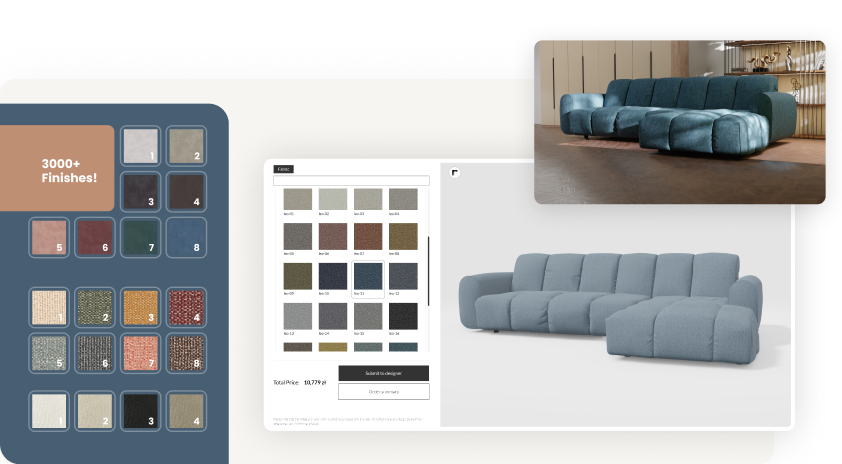 Ar-range configurator’s fabric library
Fabric and finish library built for browsing
Customers shouldn’t have to guess what “Alpine Beige 201” looks like on their configured piece.
- Interactive swatch library by color group, texture, or collection
- Real-time material previews on the actual configured product
- QR codes or email links tie physical samples back to saved online configurations
Let buyers choose finishes visually - not based on printed codes or guesswork.
From configuration to quote - automatically
Our configurator doesn’t just visualize. It quotes and prepares production data.
- Live pricing updates throughout the configuration process
- Automated generation of BOMs, spec sheets, and cut lists
- Plug-and-play with ERP, CRM, CPQ, and CAD/CAM environments
It’s like having a sales rep with 10+ years of product knowledge.
It also brings the new staff members training time from months to days.
Dedicated Showroom Configurator Mode
This isn’t a web widget dropped into a touchscreen. It’s purpose-built for guided selling.
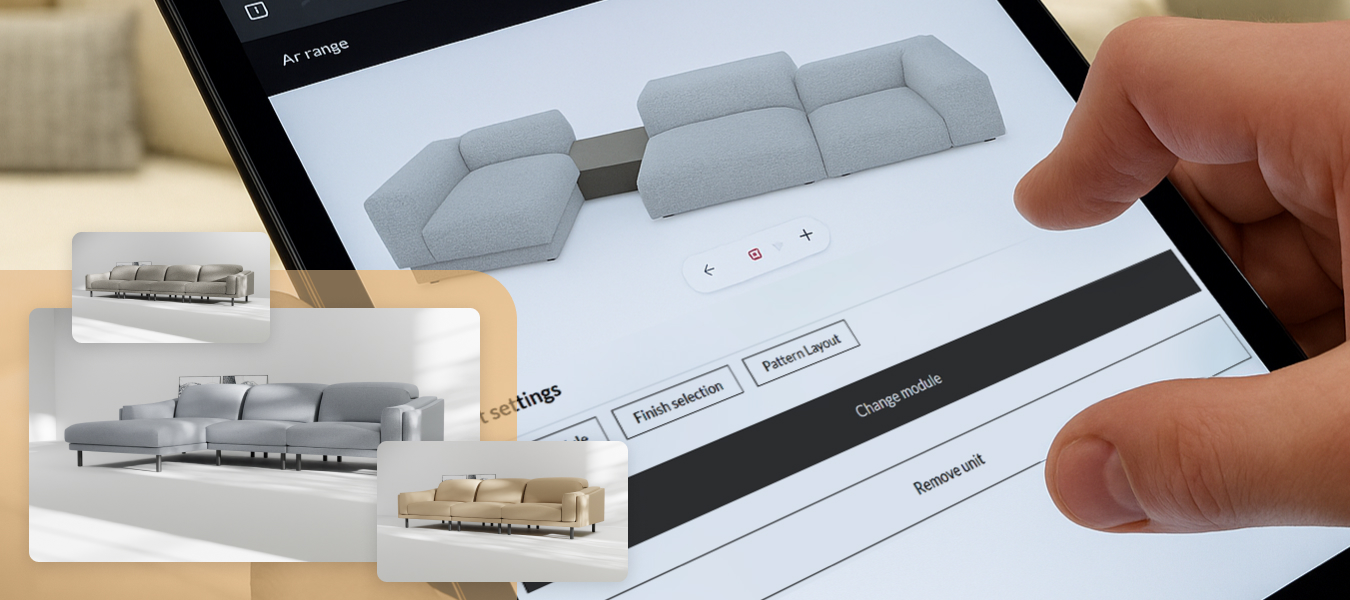
- Optimized for tablets and large-format displays
- Real-time adjustments to layout, upholstery, or modules while talking to the customer
- One-click export of quote + visuals before the customer even leaves
“No more ‘we’ll email you options next week.’ It happens live, while the buyer is still interested.”
Omnichannel Logic with Centralized Control
Use the same configuration engine across your entire sales ecosystem.
- Identical logic and visuals across web, showroom, and field sales
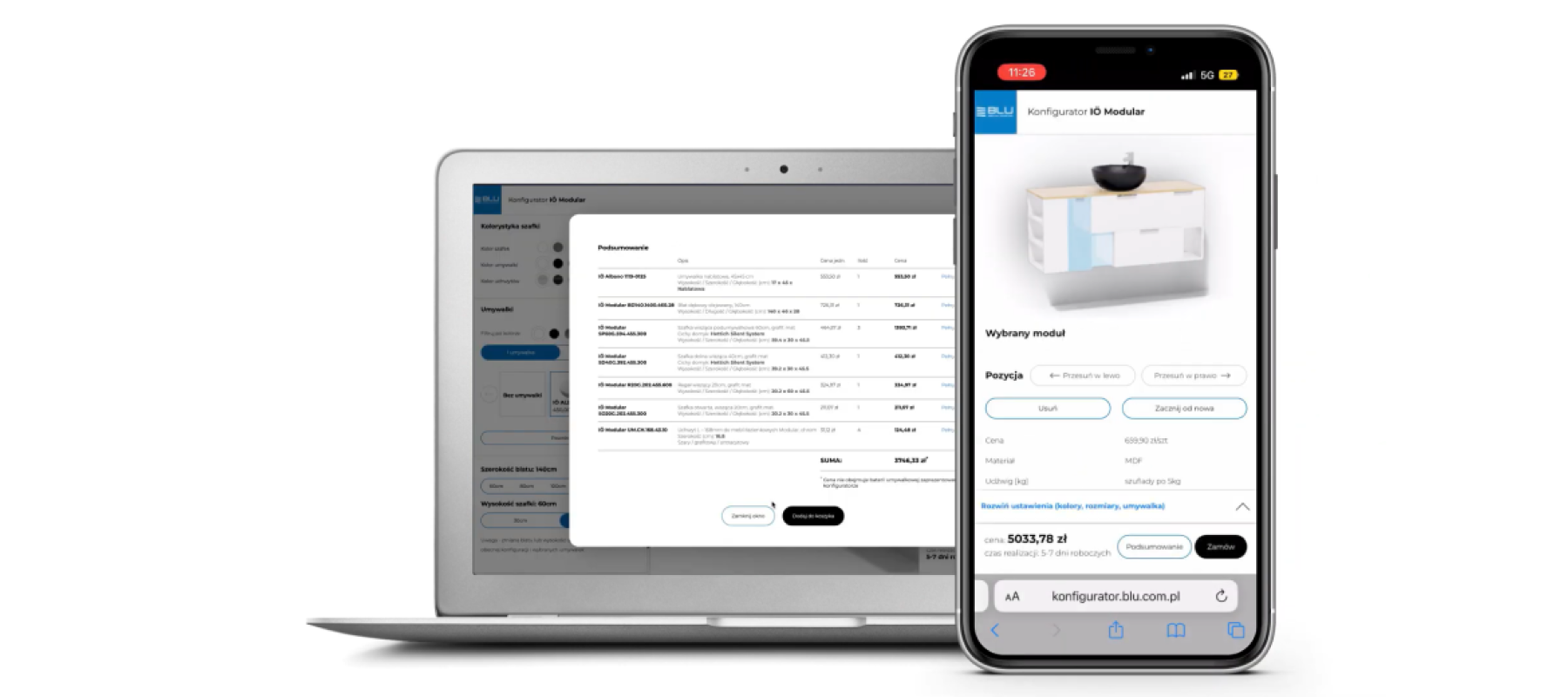
- Works seamlessly on mobile, tablet, or desktop
- Customer journeys can begin in one channel and continue in another without friction
We understand the user journey: from engagement to decision
When a customer configures a product - whether online or in your showroom - something important happens: they start imagining it in their space. That’s not browsing. That’s commitment forming.
So we treat configuration as more than a visual tool - it’s the start of the sales process. A well-executed journey removes friction at every step. It informs, reassures, and accelerates.
And it all leads to one moment that’s often overlooked - the quote.
Your Quote Is a Brand Touchpoint. Make It Count. Most configurators spit out a screenshot and a vague price. Ours delivers a branded, conversion-ready experience.
Every quote we generate includes:
- A photorealistic visual - raytraced in the cloud, not just a static screen grab
- Price breakdown - clear and editable based on configuration choices
- Your value proposition - a reminder of why this product is worth buying from you
- AR preview - QR code to view the product in the customer’s space
- Material sample request - direct link or QR to order physical swatches
- Config re-entry link -so the user can return and update their design anytime
- Contact details - not buried in the footer
- Clear call to action - with exact steps to place an order, book a showroom visit, or contact sales
This isn’t just a quote. It’s your best shot at closing the deal. It needs to look like it.
“We’re not here to build cool 3D toys. We’re here to kill the PDF quoting mess and make custom furniture sell like stock.”
Is parametric configurator the right choice for your brand
A Parametric Configurator is right for you if:
- You sell modular or made-to-measure products (e.g., shelving, modular sofas, built-ins, wardrobes).
- Customers often ask “Will it fit?” or “What will it look like in my room?” before ordering.
- Your quoting process takes more than a few minutes or requires multiple back-and-forth emails.
- Your product has rules (module spacing, max dimensions, finish combinations) that can be automated.
- You want the same sales experience in your showroom, online store, and field sales.
You might not need it if:
- You sell single, non-configurable products with only finish or color options
- Your customers always buy from stock with minimal decision time.
In such cases consider investing inAr-range Product Variant Visuals to present your products in all possible finish options, directly in your e-commerce - as displaying every variant can increase your product page engagement by up to 38%!
Expected outcome
Take a modular shelving brand as the example.
Before: Quoting takes days; customers lose momentum while they wait; sales staff are overwhelmed with routine requests.
After: Up to 80% of orders handled self-service online; a priced, validated quote in minutes; the team’s time goes to the projects that need a designer.
Final Note
Every industry reaches a tipping point. For custom furniture, that moment is now.
If you’re still quoting manually, sending PDFs by email, or fielding the same product questions over and over - your team is working too hard, and your customers aren’t moving fast enough.
A parametric configurator doesn’t just solve this with visuals. It restructures the way your business sells:
- Less time wasted on routine quotes
- Fewer errors flowing into production
- More confident, better-qualified buyers
- And more bandwidth for your team to focus on the projects that actually need them
When done right, a configurator becomes an extension of your brand, your sales team, and your operations, all rolled into one system that works 24/7 and always gets it right.
You don’t need a shiny viewer. You need a quoting engine. A guided sales layer. A buyer journey that mirrors how real people shop for complex, personalized products.
That’s what we build at Ar-range.
If you’re ready to scale personalization without drowning in complexity - let’s talk.