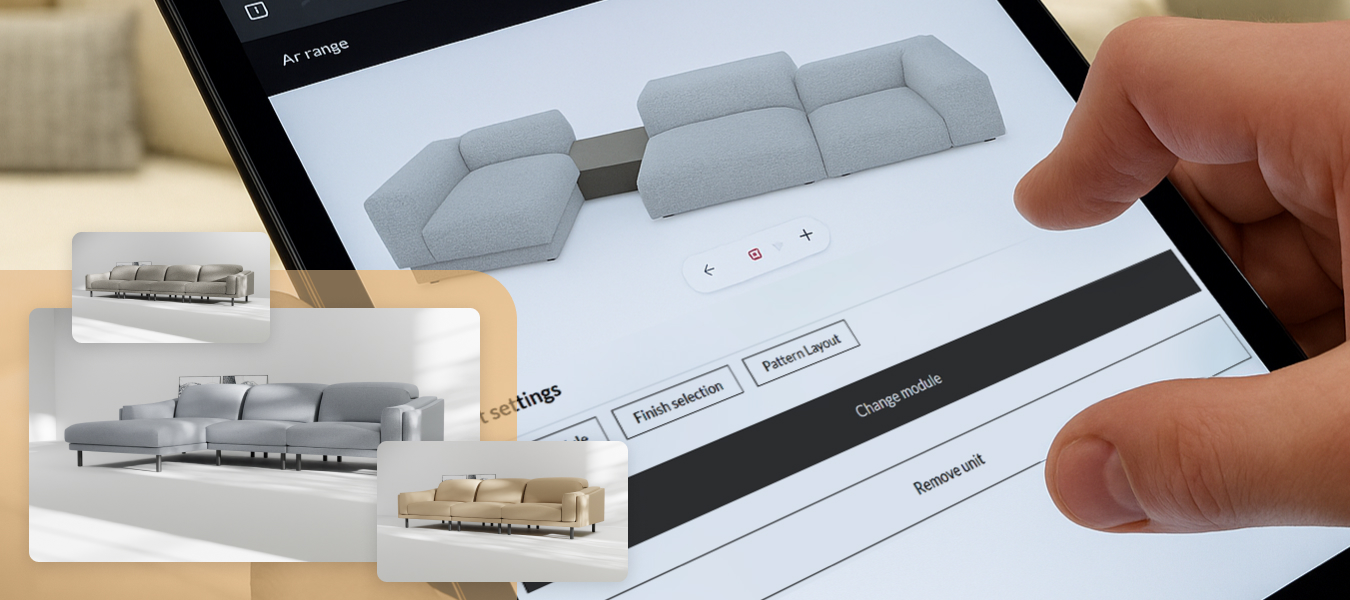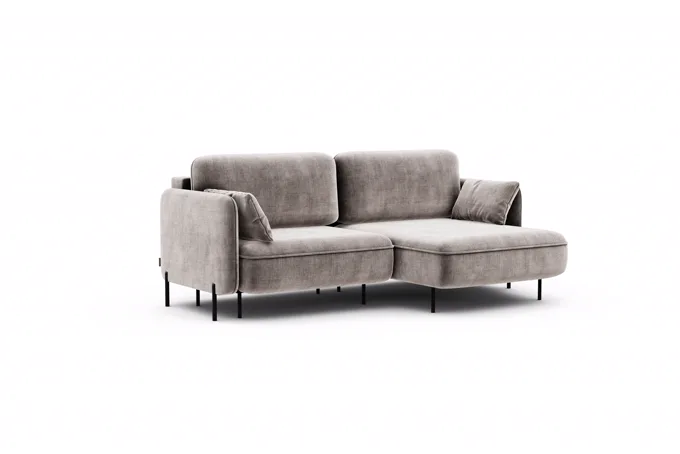
Learn about 4 types of Augmented Reality.
Check out this quick guide and decide which one is the best fit for your business and if it can provide your brand with the value you are looking for.
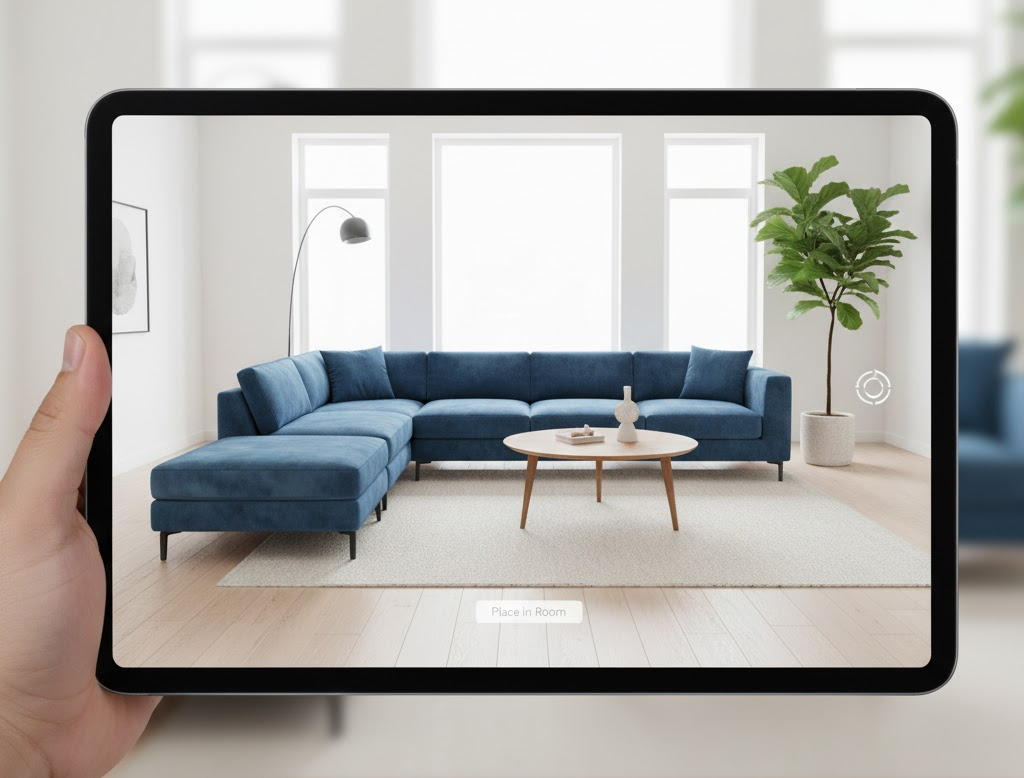
Projection-based Augmented Reality:
allows you to place an object next to you and your space, move it and walk around it. AR enhanced visualization allows seeing 3D representations of the product, its capabilities and the design. Examples for:
- Retail and e-commerce - previewing products before purchasing, furniture, toys, houses etc.
- Architecture and construction - collaborative design reviews with stakeholders, Augmented visualization of design options, proposals and layout.
- Events and exhibitions - interactive and immersive trade show booths, keynote presentations or augmented product launches.
- Museum and historical exhibitions - interactive and immersive museum and exhibition displays and tours.
- Scientific visualization and research - visualization of complex scientific data and simulations or experiments.
Location-based augmented reality:
places 3d content in a specific location in the real world Examples for:
- tourism and cultural heritage - virtual and augmented historical site tours, augmented cultural heritage preservation and restoration, virtual and augmented heritage site interpretation.
- education - virtual and augmented educational field trips, augmented scientific and historical visualization, virtual and augmented language learning, assessment and testing.
- virtual navigation - user navigation in big stores, shopping malls, museums or airports.
- gaming - remember Pokemon GO
Overlay AR:
Augments a physically existing object Examples for:
- Retail - interactive shopping experiences like augmented product demonstrations and tutorials in-store
- Advertising and marketing - AR-enhanced print ads, or outdoor advertising
- Beauty and fashion - virtual product testing and sampling e. g. trying out lipsticks, without the need to physically apply the product, or virtual makeup tutorials and demonstrations.
Contour-based AR:
overlays digital content on physical objects based on shape recognition. Examples for:
- Manufacturing - AR-based visual providing workers instructions that improve workforce productivity. AR provides real-time visual guidance on tasks like product assembly, machine operation, and warehouse picking. It replaces 2d manuals with interactive 3d visualizations for step by step guidance, reducing room for interpretation.
- Education & Healthcare and medical procedures - providing users with a learning experience based on physical objects like for instance interactive and immersive anatomy and biology studies
- Retail and e-commerce - virtual try-on and fitting of clothing and accessories, interactive product visualization and demonstration, augmented product catalogs and advertisements, immersive product customization, augmented reality product packaging
- Automotive - virtual try-on and fitting of automotive parts and accessories, vehicle demonstrations, vehicle maintenance and repair guidance, safety features demonstration, vehicle design and prototyping.
Still not sure how to use AR Ask yourself these 5 questions:
- In what areas of my organization can I use AR
- Will the use of AR change communication with users/customers and how
- Will it have an impact on sales or cost reduction
- How will AR empower a brand or organization
- How can I conduct an AR MVP project in my organization
For any more questions contact the Ar-range team!