Introduction to the Parametric Configurator
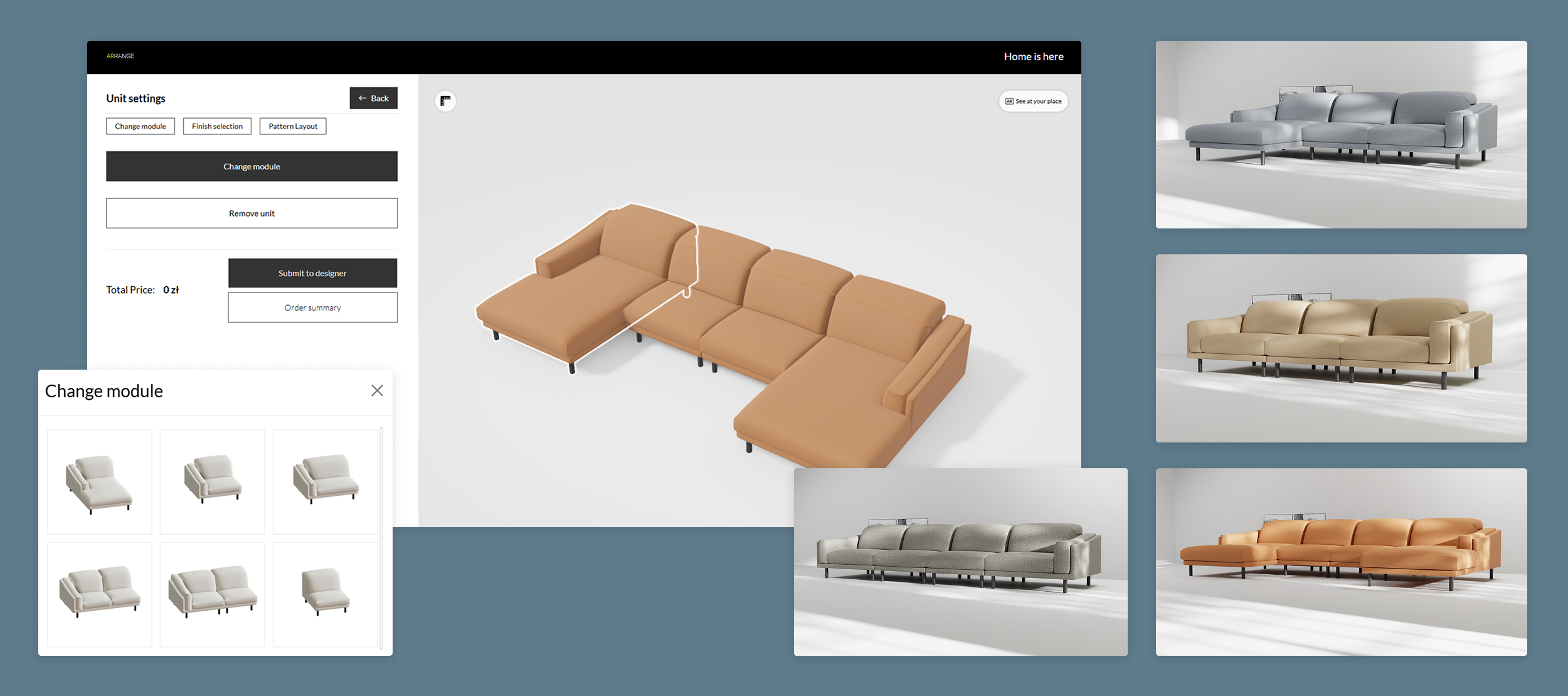
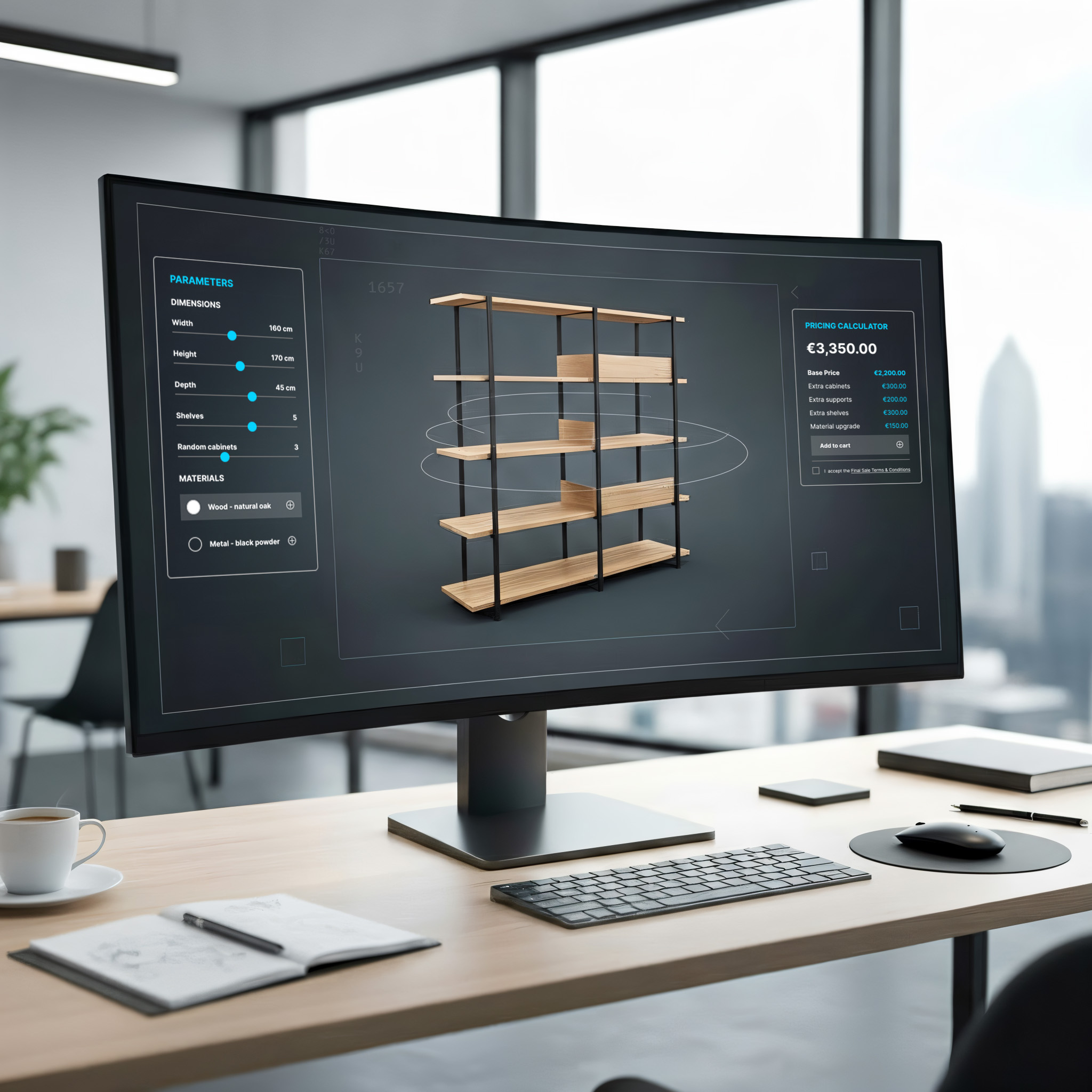
If you’ve ever used an online tool that lets you tweak a sofa’s dimensions, swap fabrics, or instantly see how much your dream layout costs, you’ve already met a parametric configurator – even if you didn’t know its name. It’s a customer-friendly CAD design tool and, behind the scenes, a highly advanced product pricing calculator.
Think of it like a car’s dashboard. On the surface, you’re simply adjusting sliders, colors, or features. Under the hood, the engine calculates how each change affects geometry, materials, and cost. Every decision you make updates connected data instantly while keeping it all manufacturable. In the furniture world, this kind of system doesn’t just impress customers – it keeps factories running smoothly and effectively bridges design, pricing, and production.
Unlike a static online catalog, a parametric configurator reacts in real time. It knows the rules of what can and cannot be built, applies live pricing logic, and prepares complete technical data for manufacturing. When it’s integrated with an ERP system, it connects online sales directly with production lines.
You can also check out what Parametric Design actually is in the first place
The Role of Parametric Configurators in Modern Retail
The modern furniture sale rarely happens in one place. Customers drift between online visualization, showrooms, and mobile browsing. A furniture configurator acts as the glue between these worlds. When connected properly, what the customer builds on their phone can show up on a tablet in your store. This continuity transforms interest into action, keeping furniture leads warm throughout their entire journey.
Yet, many brands struggle with this. They treat their online configurator as an isolated brochure instead of something that can feed live data into ERP and showroom systems. That’s when things usually go wrong. Without proper ERP integration, the flow of pricing, stock, and manufacturing data gets interrupted – and the customer ends up waiting for quotes that should have been instant.
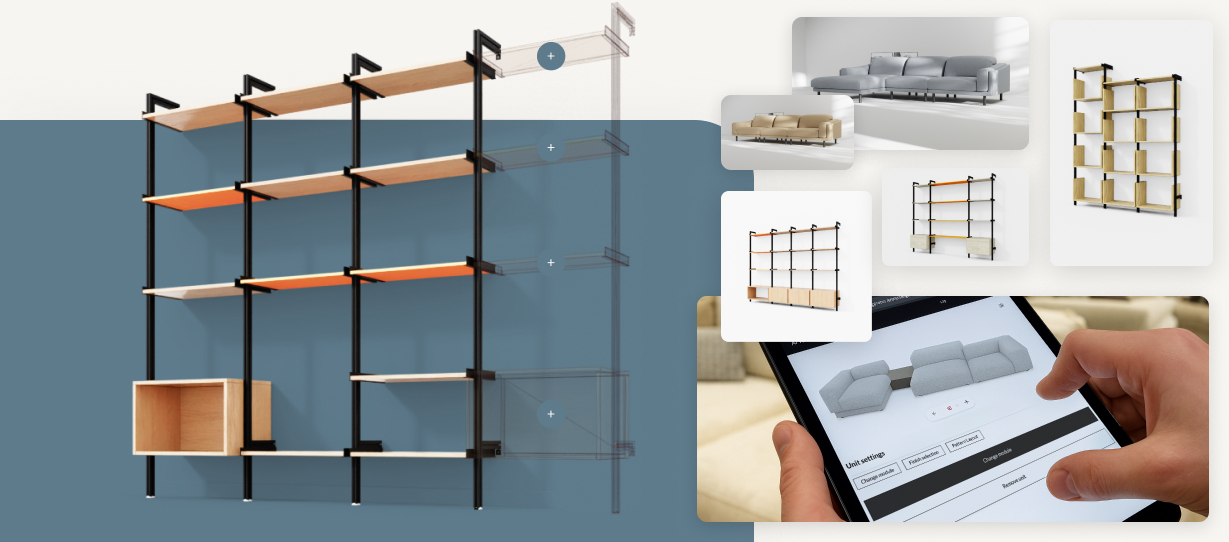
I’ve seen retailers fix this simply by connecting their configurator to their backend. Suddenly the time from idea to confirmed order drops from days to hours. Look at our 3D Configurator for Shelving System case study for a working example. It shows how a single digital tool can bridge complex data across e-commerce, showroom tablets, and ERP systems.
Impact on Customer Decision-Making and Engagement
In an online environment, people buy with their eyes and confidence. That’s why a parametric configurator is really a confidence machine – combining automated 3D rendering with rule-based guidance that subtly helps the customer stay within feasible and affordable boundaries. What they see is a beautifully rendered sofa; what’s happening under the surface is precise geometry and bill of materials logic ensuring manufacturability.
We’ve seen brands achieve up to 20% higher conversion rates when using configurators with built-in product pricing calculator logic. Why Because customers aren’t stalled by uncertainty. They can instantly see both what’s possible and what it costs.
This transparency builds trust. And trust, in sales, equals action. Customers provide better quality furniture leads, retailers capture more accurate orders, and production teams avoid miscommunication.
If you design your configurator well, it effectively becomes a smart assistant for both users and sales reps – a shared visualization workspace rather than a cold checkout form.
Technological Backbone and Integration Strategies
Every great parametric configurator sits on a simple yet powerful foundation: parameters, rules, and connections. Just like in architecture, where dynamic designs adjust to constraints (as explained in An Introduction to Parametric Design in Architecture - Vectorworks), furniture configurators use flexible data structures to modify parts and materials in real time.
Underneath it all, there’s a rule-based engine ensuring no one designs an impossible piece. A product pricing calculator service translates those design changes into live cost updates. Then the system pushes data into ERP integration points - updating material requirements, sending specifications to CAM systems, and syncing with online shops.
This connected network makes your configurator not just a sales tool, but an automation hub. It’s your bridge between e-commerce pages and CNC machines, between customer creativity and factory precision. In our own Parametric Configuration Engine, we’ve built exactly this chain, where every front-end click echoes through manufacturing and back again.
And when you add AR into the mix, clarity leaps even higher. With tools like our Augmented Reality Viewer, customers can place their configured product in their real space. It’s a simple step that massively increases confidence and reduces returns.
Practical Applications and Successful Integration
The best implementations start small but think big. Rather than trying to digitize your entire catalog overnight, focus on one configurable product line. Map the customer journey from inspiration to order. Identify what data already exists in your ERP and where manual steps slow things down.
From there, deploy the configurator as the link that fills those gaps. Real success shows in measurable KPIs:
- Shorter quote response times (minutes instead of hours)
- Higher accuracy of orders (near 100% alignment between online specs and workshop results)
- Higher AOV (average order value) because customers explore premium combinations
- Lower return rates, thanks to visual and technical clarity
Good implementations usually follow a framework similar to our Personalization Strategy for Furniture Brands, balancing complexity and guidance to avoid decision fatigue. It’s all about giving freedom with direction.
These strategies not only make buyers happier - they make teams more efficient. Sales reps stop retyping specs, production gets automatic BOMs, and managers finally see sales and factory data living in the same digital flow.
Conclusion: Overcoming Challenges and Realizing Full Potential
Building a powerful furniture configurator isn’t easy. The biggest mistake I see is treating it as a shiny add-on instead of an operational backbone. When the configurator isn’t anchored to the ERP, e-commerce, and manufacturing systems, automation potential is lost.
But when well integrated, a parametric configurator becomes more than software - it’s the mind of your entire customization process. It unites customer excitement with production logic and turns digital experiences into deliverable products.
So ask yourself: Are your current tools helping customers dream realistically and order confidently, or are they just digital brochures The difference between the two often defines whether a brand scales personalization profitably or struggles to keep up.