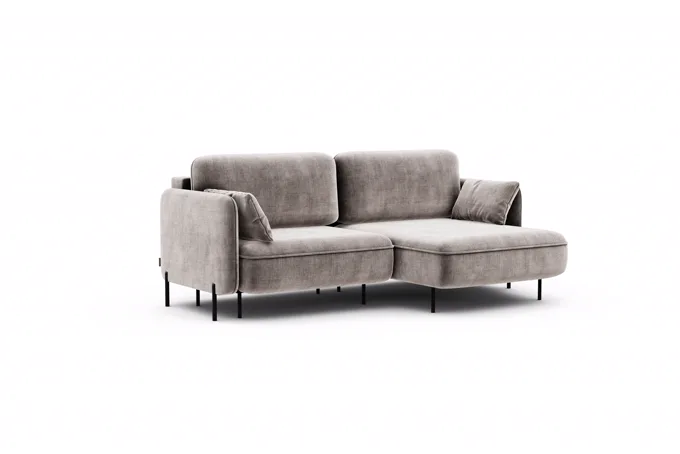
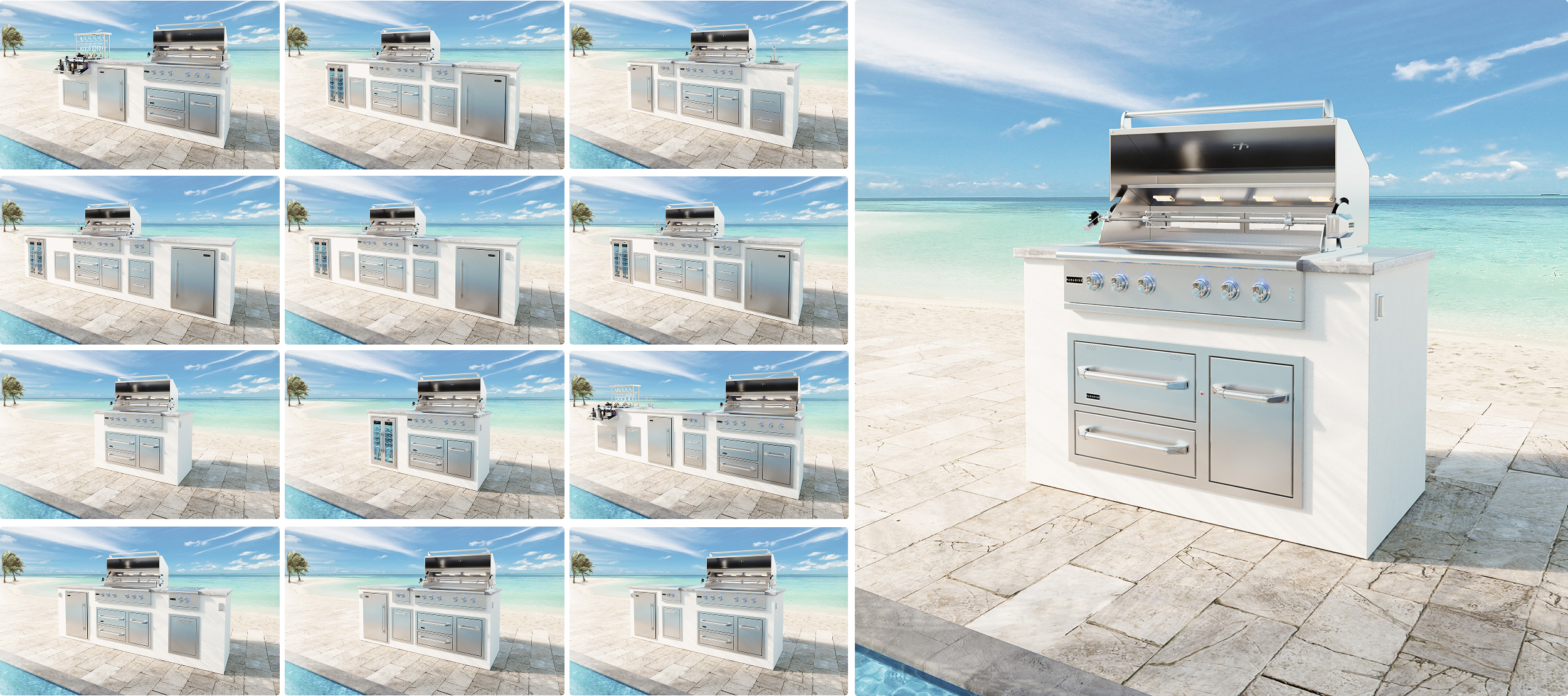
1. Automate Rendering & Cover Every Variant
Traditional furniture rendering services are slow, expensive, and unscalable. An artist sets up a scene, hits render, waits hours, then repeats for every fabric or finish.
With furniture rendering automation, the model flips. At Ar-range, we don’t hand you another DIY tool - we bring the software and the expertise together as a turnkey service. Whether it’s a single finish library or millions of product variants, we deliver the renders you need at scale. No bottlenecks, no internal chaos - just the job done.
The advantage: you can finally render every SKU: every fabric, size, finish, and module. No missing colors, no “imagine it in oak.” Just clarity.
And clarity sells:
- Conversion rates increase 94–200% with full variant visualization and AR (Zolak).
- Return rates drop 5–30%, because customers know exactly what they’re buying.
- Costs fall 6–8x vs traditional photography, and timelines shrink from weeks to hours
For proof in action, see our case study automating sofa visuals for Scandic Sofa brand
2. Leverage AI for Backgrounds & Quick Animations
Automation isn’t the only breakthrough. Today’s AI tools open up new possibilities for creative, low-cost content generation.
- AI-generated backgrounds: Drop a static render into a “Scandinavian loft” or “urban studio” without a new 3D scene build. Perfect for brainstorming campaigns, drafting brand themes, or producing market-specific ads at speed.
- Rapid animations: With AI, static renders can be animated in synthetic environments: camera pans, lighting changes, even looping lifestyle clips. They won’t replace premium production, but they’re ideal for social media storytelling at 10x lower cost.
- Prototyping at scale: Instead of waiting weeks for a polished marketing scene, you can now prototype visuals in hours, then refine only the concepts that resonate.
For inspiration, check our Automated Visuals Page.
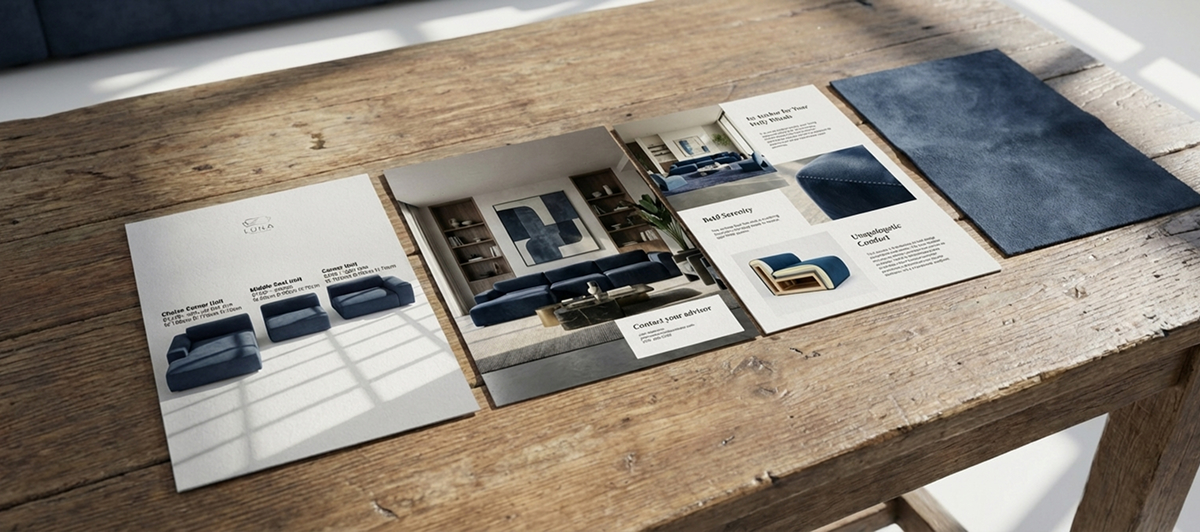
3. Use Room & Interior Scene Libraries for Lifestyle Impact
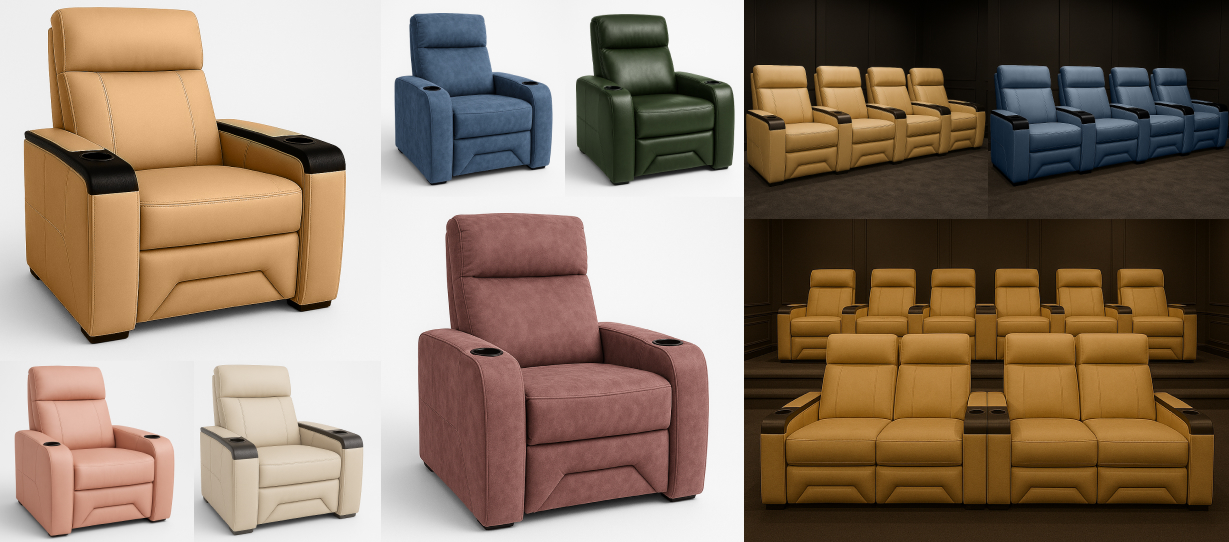 Variant visuals show both finish options and product context by placing it in uniform scenes.
Flat product cutouts are functional. But customers buy furniture for real spaces, not white backgrounds. That’s why brands invest in photorealistic furniture renderings built with room and interior libraries.
A furniture rendering service like this offers pre-made lifestyle interiors where your products can be placed seamlessly:
- Cost-effective: No expensive shoots, no endless set building.
- Scalable: Consistent visual style across collections.
- Versatile: The same scene supports multiple SKUs for catalogs, ads, and websites.
Combine scene libraries with AI-generated backgrounds (Point 2), and you get both production-quality lifestyle imagery and fast-turnaround concept visuals.
See also:
- The role of lifestyle images in configurators
- Best tools to boost online furniture sales
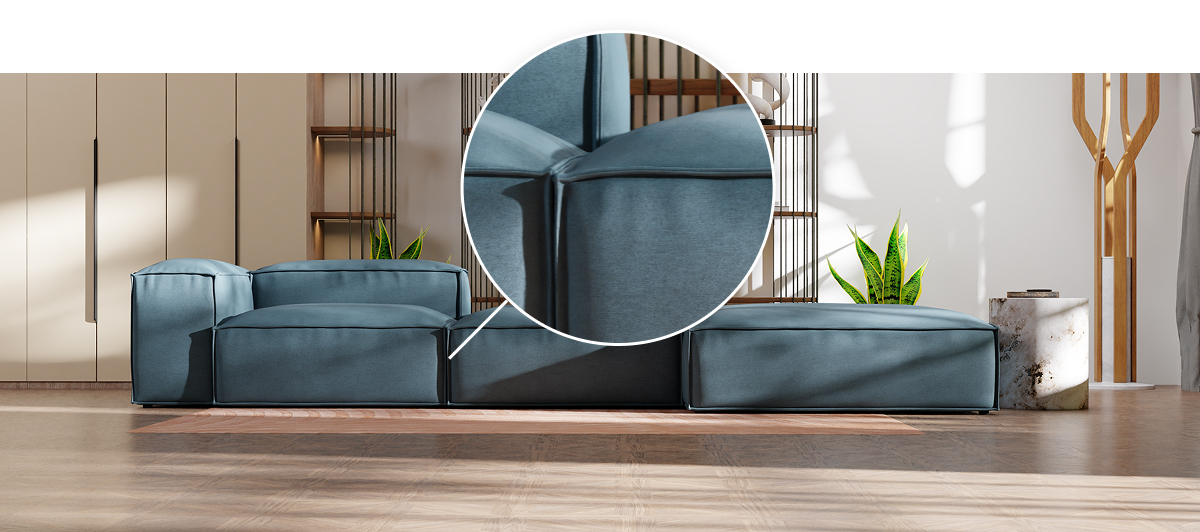
4. Highlight Craftsmanship with Close-Up Renders
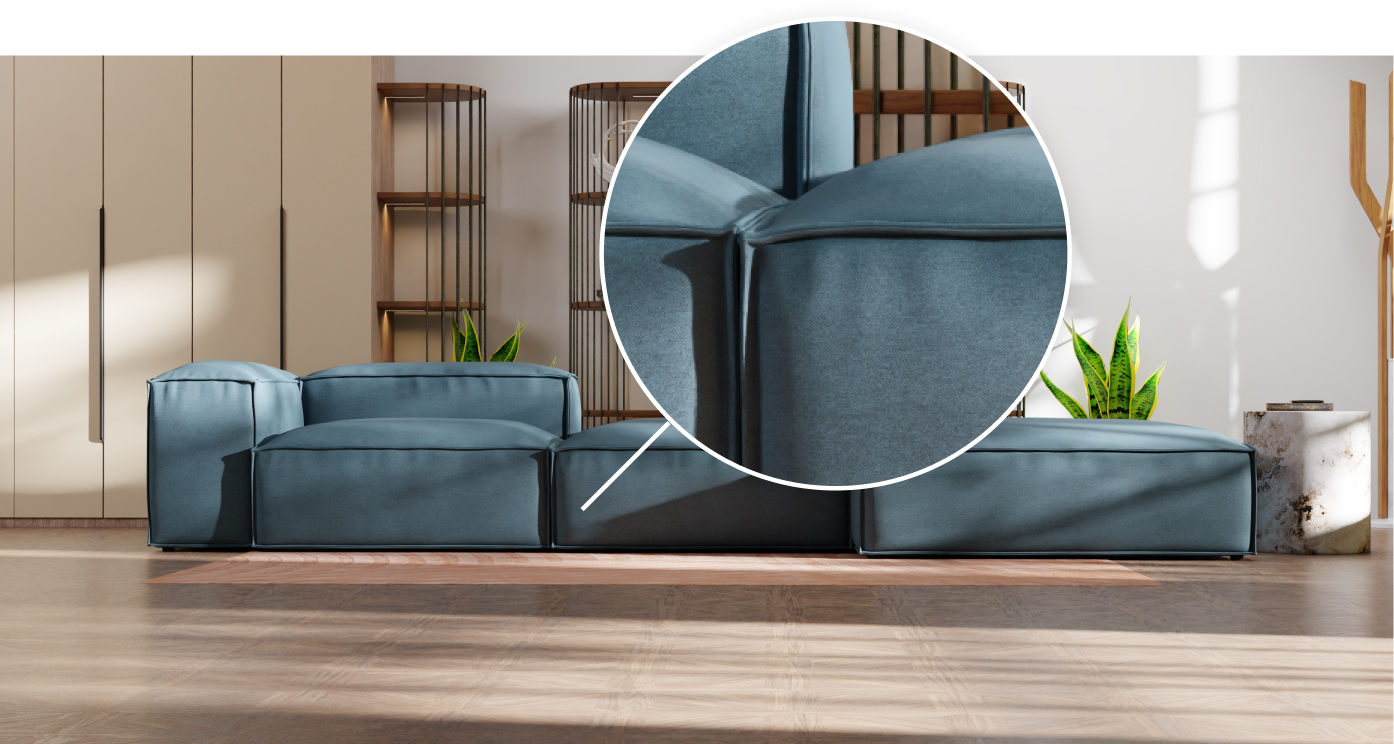 Product closeups allow you to present intricate details of fabrics and finishes.
If online 3D is about exploration, photorealistic furniture renderings are about persuasion. And nothing persuades like detail.
Close-up 3D furniture rendering shows stitching, fabric weave, leather grain, brushed steel - the micro details customers need to justify premium pricing. These visuals act as a digital “touch-and-feel” moment, bridging the showroom and the e-commerce cart.
Learn more:
- Best way to show upholstery texture and stitching
- How configurators justify premium pricing
5. Centralize All Assets in a Content Hub
Here’s the hidden trap: once you’ve automated rendering, you’ll generate tens of thousands of assets - product renders, 360s, AR files. Without structure, it’s chaos: Dropbox mess, duplicated files, endless re-render requests.
Acentralized content hub solves this by making every asset findable, tagged, and linked to SKUs.
- Marketing grabs campaign visuals instantly.
- Sales can send the exact variant render to a dealer.
- E-commerce syncs visuals directly to product pages.
No duplication. No bottlenecks. Just a single source of truth for furniture visualization. See also: How many images do you need per product variant?
Bonus Ways to Stay Ahead
Educate Buyers: Renders vs Online 3D
Customers often don’t know the difference between pre-rendered visuals vs real-time 3D. Both matter: raytraced renders persuade, while online 3D engages.
Prepare for AR and Immersive Commerce
AR is no longer optional. Shopify data shows AR doubles furniture conversion rates. The same AI product visualization pipeline can output stills, 360s, and AR models, ensuring your assets are future-proof. See:Use of AR in furniture e-commerce andHow to use AR as a sales advantage.
Use Configurators as a Content Engine
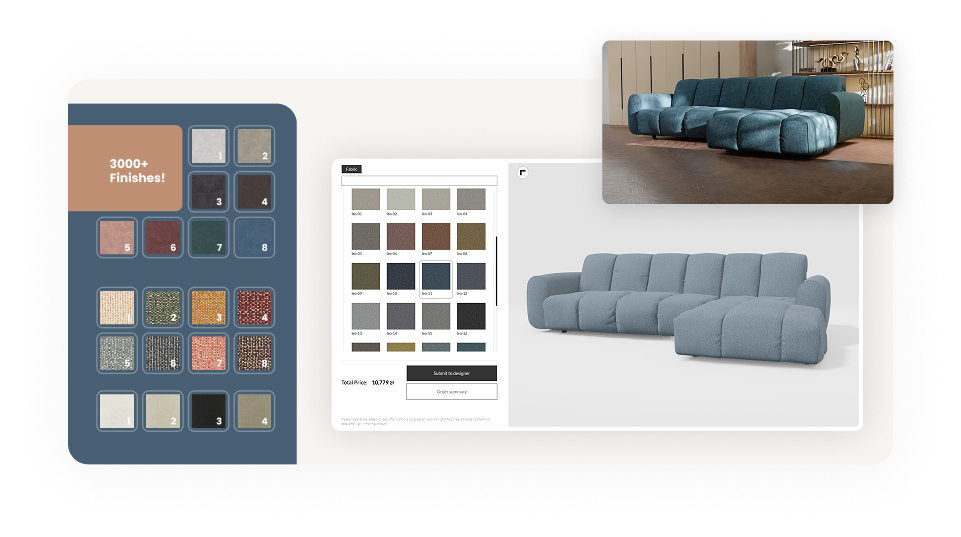 Ar-range product configurator allows to quickly generate raytraced render using cloud rendering.
This is where Ar-range’s modular and parametric configurators really shine. Beyond guiding the buyer, they can automatically raytrace renders of any configured product directly in the cloud. That means your configurator doubles as a content creation engine.
A modular sofa configurator, for instance, can generate billions of combinations. Every single one can be rendered out as a photorealistic image, 360, or AR mode l - giving you an always-on pipeline of marketing assets. Instead of manually commissioning new shots, your configurator becomes a visual factory that feeds your e-commerce, ads, catalogs, and sales decks with unlimited variant visuals.
Conclusion
Furniture renderings aren’t just visuals. Done right, they’re:
- Automated pipelines that cut costs by up to 70%.
- Variant-rich libraries that keep buyers deciding instead of guessing.
- AI-augmented concepts that slash campaign prototyping costs.
- Lifestyle-ready content that sells aspiration.
- Closeups that prove craftsmanship.
- Centralized assets that future-proof your brand.
And with AR, they bridge the gap between online browsing and showroom confidence.
The brands winning today aren’t the ones with the nicest sofa photos. They’re the ones who turned furniture rendering into a scalable, automated system - a growth engine for marketing, sales, and customer trust.