This page replaces a 2022 version that called AR a must-have tool for the furniture industry. Since then, independent research has measured what furniture shoppers actually do with AR, and our own installs across toys, chairs, sofas and outdoor kitchens showed the same thing.
That version was wrong.
This page is written for brands that make and sell their own furniture. A marketplace or a retailer with returning buyers is a different business, and some of what follows does not apply to it.
The question AR answers well
AR does one thing better than any photo: it shows how a product sits in the buyer’s actual space. Where the buyer’s real fear is “will it fit”, AR resolves it and helps the sale.
Where the buyer is asking something else, whether the fabric is soft, whether the colour matches the curtains, whether it is good value, AR is a button on the page that nobody presses.
The product decides first. Polish only matters once the product has passed that test.
Most shoppers never open it
Baymard Institute ran large-scale user tests of “View in Room” on furniture stores in 2024. Sofa and home retailers, web AR, iOS and Android.
87% of shoppers who met the feature did not use it. 79% went straight to the product images. Only 6% went looking for AR on their own. The people who did try it often came away less sure about fit than the photos had left them, and put off the decision.
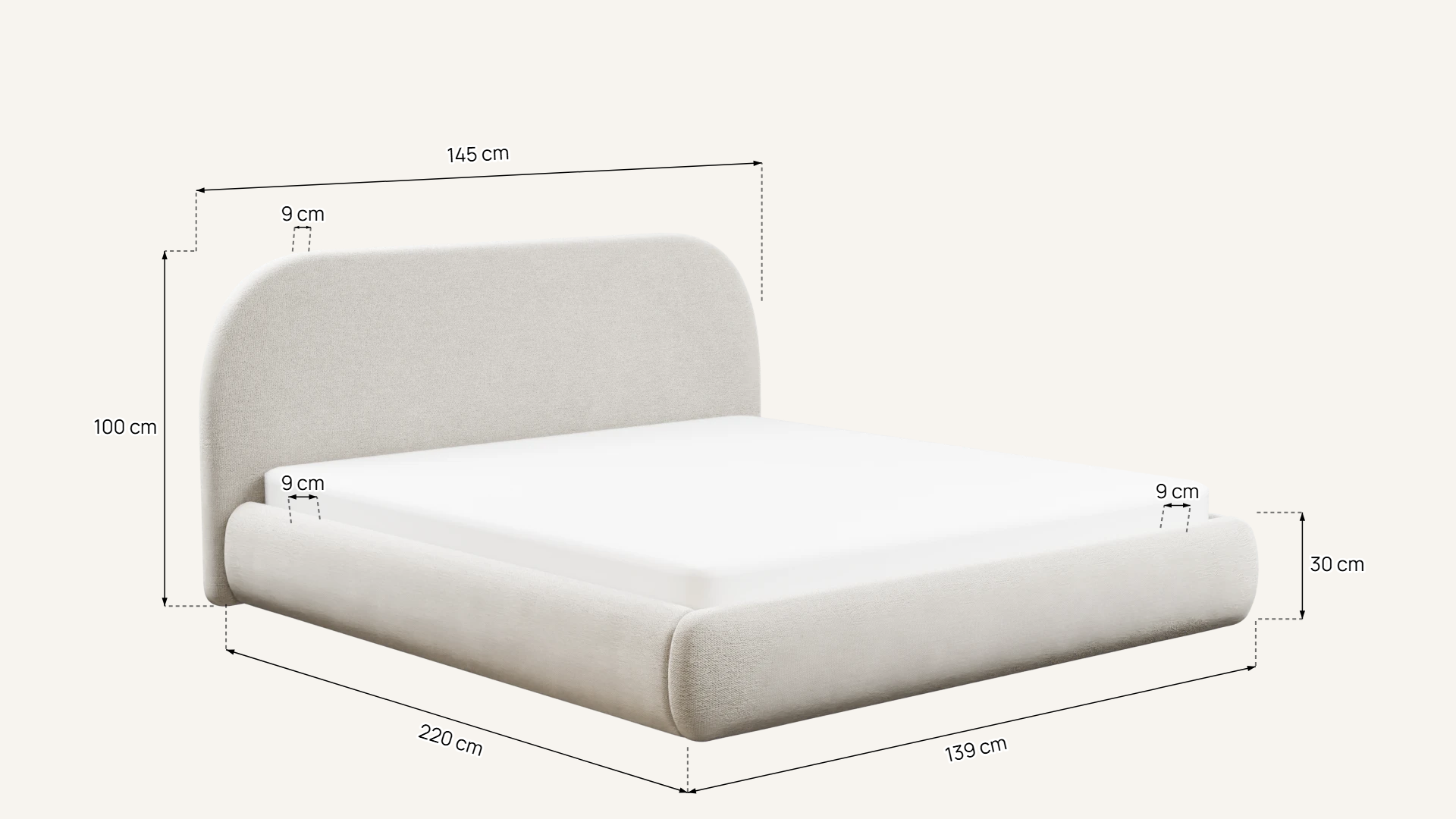
Their advice to furniture retailers was to deprioritise AR and spend the effort on images with real zoom, scale-reference shots and dimensions on the product. Full findings: Baymard, Deprioritize “View in Room” AR.
Our installs said the same
We are not a research lab. We have shipped web AR for furniture brands since 2020, and what follows is what we watched happen, not a study.
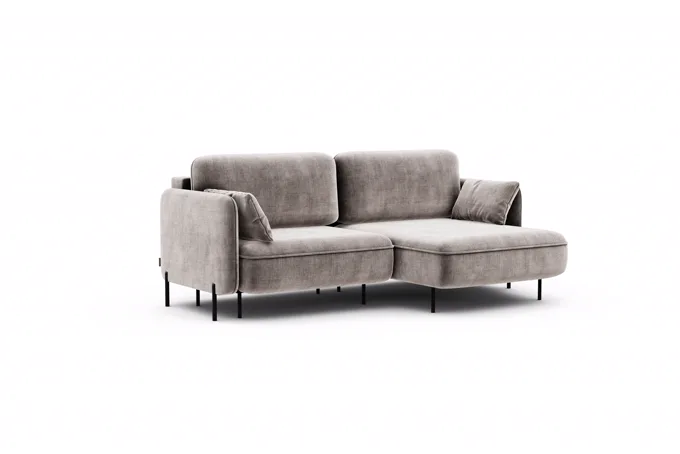
On wooden toys, on small chairs and accessories, and on a small furniture range with few options, the AR button sat on the product page month after month and almost nobody opened it. On a sofa brand with fully automated variant images already live, AR was the least-used output of the whole visual system. Every one of those products is judged on look, feel and price. None of them raises the question AR answers.
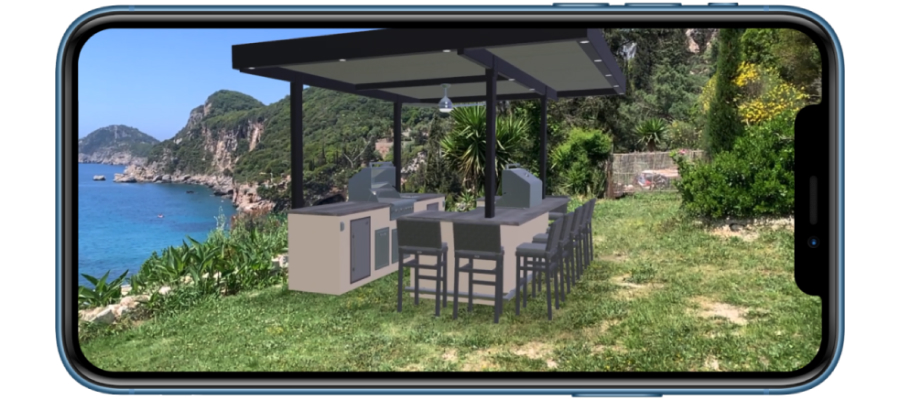
On outdoor kitchens, large modular islands, it was the opposite. Buyers opened it, and opened it hard.
Low usage is not low value. A feature that 5% of visitors open can be the most valuable thing on the page, if those 5% are about to spend the price of a car on a kitchen island. A feature 30% of visitors open can be worth nothing if it changes no decision. The count that matters is who opens it and what they were about to buy.
The one that worked had to be turned off
The outdoor kitchen brand sells mostly in showrooms. A customer builds the island with a salesperson, sees it in 3D, and is ready to sign.
Then they see the AR button. They want to go home and check it on their own patio first. A deal that could have closed that afternoon goes home to think about it, and some of those never come back.
We built a showroom version of the configurator with AR removed. Sales moved forward again. The same feature that sells online stalls in the room, because online the buyer is alone and needs the reassurance, and in the room they already have it.
This is our own story, one brand, and we tell it as that. Baymard saw the same shape in testing: AR introducing doubt and delaying the decision. So the question is never “can we add AR”. It is where the button sits in the buyer’s journey. Before the decision, it is an exit. After the decision, it is a confirmation.
AR also shows their room around your product
A studio shot puts your sofa in a room you chose. AR puts it in a room the customer chose, and most rooms are not studios. They are cramped, half-lit, already full of furniture, and the sofa lands in the middle of it.
A 2023 study in Psychology & Marketing tested exactly this, in two online experiments and a field study with about a thousand participants. Products viewed in AR in a disorganised room were rated lower in quality, and people were less willing to buy them. The messy context made the image harder to process, and that discomfort stuck to the product. Pfaff and Spann, When reality backfires.
This is the part of the showroom story we only understood later. The buyer who went home to check the patio also saw the patio. AR hands the customer control of the context your product is judged in, and the vendor pitch never mentions that you have given it away.
What AR does to fabric
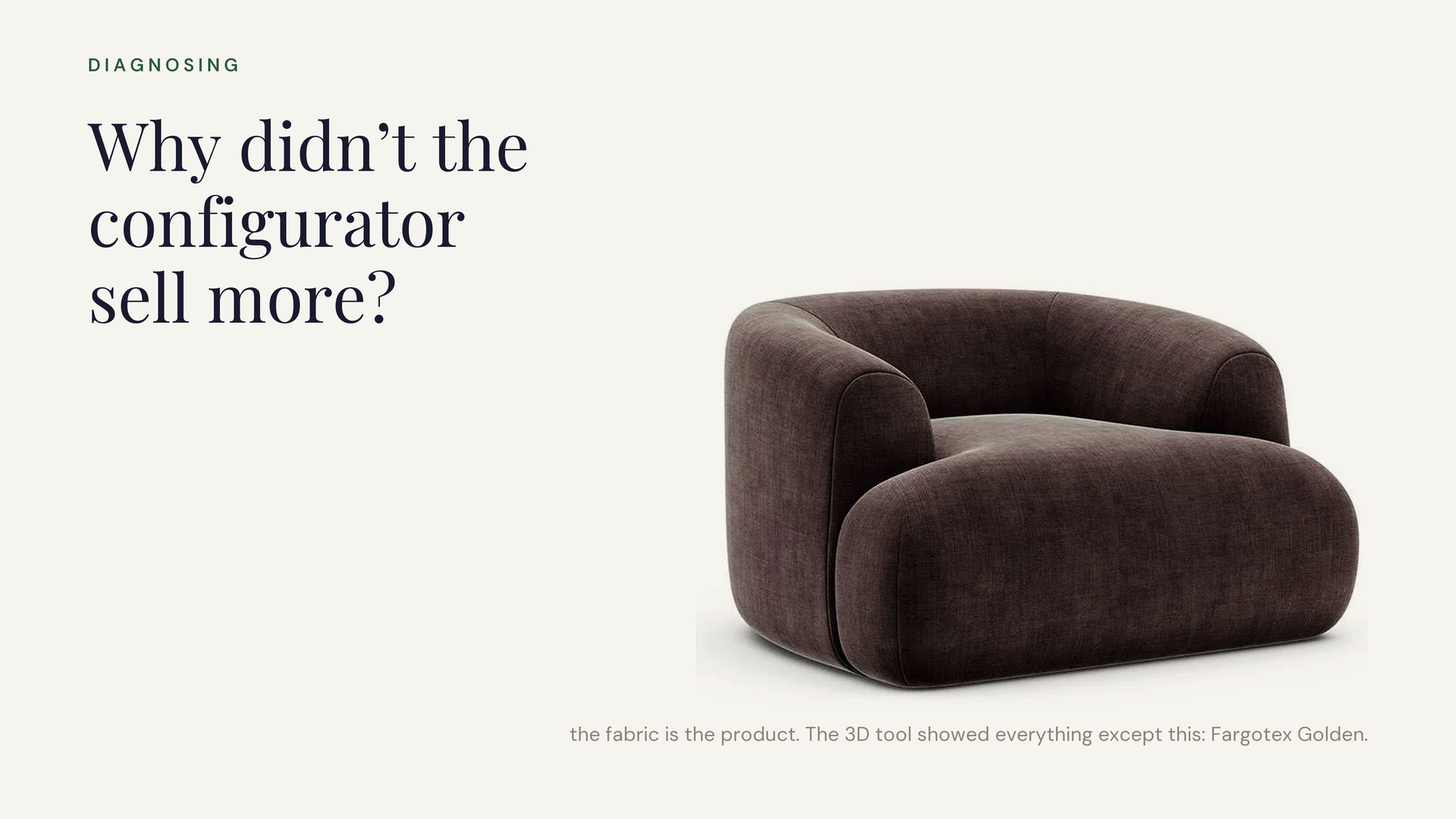
A photoreal render of bouclé is expensive to make. It needs the strand depth, the way light scatters under the surface, the shadow each loop throws on its neighbour. That is what sells an upholstered sofa online.
AR renders in real time on a phone. It carries the colour and the roughness of the fabric well enough. What it cannot do at that speed is the strand geometry and the light scattering under the surface, so however many hours went into the render, the sofa in your living room shows a smooth mapped cloth. Every angle shows the same cloth.
Baymard saw the buyer’s side of this in testing: participants noticed the fabric in AR did not match the product photos, and trusted the AR less for it. For fabric-led furniture, route the material question to a close-up render or a zoomable 360, and keep AR for the question of size.
The numbers you will be shown
Every AR vendor’s site carries a conversion figure. Ninety-four percent higher conversion. Two hundred percent uplift. The 2022 version of this page quoted one of them. We took it out.
The trick is the denominator. Those figures count what happened among the people who opened AR, and only interested buyers open an opt-in feature. Measured on an already keen group, any number looks enormous. It says nothing about the visitors who never tapped, and nothing about sales lift on the page as a whole.
When a figure lands, translate it back into plain words: out of everyone who reached the product page, how many paid? If the claimed rate is impossible at that level, it is engagement wearing a conversion label.
The same rule applies to us. We are not going to hand you our tap counts as if they were a study, and we do not publish a return-rate figure for AR, because we have not measured one we would stand behind. The numbers on this page come from a user-research institute and a peer-reviewed journal. Neither sells AR.
App or browser
Web AR opens from the product page in one tap. An app means the app store, a download, a new interface to learn, all paid by a customer who came to buy a sofa once.
For a single brand, an app only makes sense as a habit builder. Its whole economics rest on the customer coming back: each return visit reuses the install, the friction falls toward zero, and over time opening the app becomes the reflex. Nir Eyal’s Hooked lays out that loop in detail, trigger to action to reward to investment, for anyone who wants the full model.
Buying a sofa from one brand is not a habit. Nobody opens a single manufacturer’s app on a Tuesday to see what is new. The customer buys one bed, uses the tool once, and the entire install cost lands on that single session. Most people faced with that choice simply close the tab.
A marketplace with returning buyers can build the habit and amortise the app. A manufacturer whose customer comes back every ten years cannot. For the brands we work with, web AR is the only version worth building.
The asset is the 3D model, and AR is one export from it
This is the part of the old page that was right, and it deserved to be the whole article.
Once you have a 3D model of a product, AR is a cheap export. So are the variant images for every fabric, the close-ups, the 360 spin, the dimension drawing, the configurator scene and the swatch on the sample card. One model library feeds all of them.
Brands that buy AR first pay for the model and use it once. Brands that build the model library first get every visual format from it, and switch AR on for the handful of products where the fit question is real.
That is how we build it now. The catalogue and its models sit in one place, Content Hub, and every product, fabric and dimension is a record there. Variant Visuals renders the images for every variant from those records, and the Modular Configurator reads the same models live. AR is a flag on the products that earn it, exported from the model you already paid for.
Four questions before you buy AR
- Is the buyer afraid it will not fit? A big footprint, a fixed alcove, a patio. If yes, AR can pay. If the product is judged on look, feel or price, expect the Baymard numbers: most visitors never tap it.
- Where does the button sit? After the buyer has decided, it confirms. Before, it gives them a reason to leave. Showroom and online journeys need different answers.
- Is the material the decision? If yes, AR will show it worse than a close-up does. Show the fabric somewhere else.
- What does the customer’s room do to the product? If your buyer’s home is likely to be cramped or cluttered, AR will show your product in it. A curated room shot may sell it better than their own living room does.
If you already have 3D models, you are most of the way there. If you do not, start with the models, because everything on the product page comes from them, and AR is the least of it.
Match the tool to the question
Every tool on a product page answers one uncertainty. Pick by the question the buyer is actually asking, and most of the time the answer is a good image.
| What the buyer is asking | The tool that answers it |
|---|---|
| “Will it fit my patio?” | AR, true to scale, in their space. |
| “Will this sofa work in my room?” | A curated room shot first. AR only if the doubt is size, because their own room can make the sofa look worse. |
| “What does the bouclé actually look like?” | A photoreal close-up with real zoom. Never AR. |
| “Which configuration do I want?” | A configurator that shows the exact build and its price. |
| “What is the difference between these two fabrics?” | Variant images on the same shot, plus a swatch they can order. |
| “How big is it?” | Dimensions on the image of the exact variant. AR to confirm, after they have decided. |
| “Can I see it in every option?” | Variant visuals rendered from one 3D model, every fabric and size covered. |
AR wins one row and a half. Images win the rest. That is the ratio to budget by.
FAQ
Does augmented reality increase conversion in furniture e-commerce? For large products where the buyer’s real fear is fit, it can. For small and look-and-feel products, Baymard’s 2024 tests found 87% of furniture shoppers skip the feature, and our own installs went almost untouched. Vendor conversion figures usually count engagement among people who opened AR, and that is a different number.
Does AR reduce returns for furniture? We have no measured figure we would publish. The effect we can point to sits earlier: a buyer who cannot confirm size often stops before ordering at all.
Can AR make customers less likely to buy? Yes. A 2023 study in Psychology & Marketing found that products viewed in AR in a disorganised room were rated lower in quality and bought less. AR shows the customer’s room around your product, and you do not control that room.
Should a furniture brand build an AR app? Only with returning customers to spread the install cost over. A one-off buyer uses the browser version or nothing.
Which furniture products are worth AR? Outdoor kitchens, large modular sofas, wardrobes, anything with a big footprint that has to fit a specific space. Chairs, toys, cushions and accessories are the products where it went unused.
Is there independent research on AR in furniture e-commerce? Yes. Baymard Institute’s 2024 user tests on furniture retailers found 87% of shoppers did not use “View in Room” when offered, and recommended prioritising zoomable images, scale references and dimensions over AR.
Do I need AR if I already have a 3D configurator? Only for the products that pass the fit question. The configurator already holds the model, so adding AR to those products is a flag, and leaving it off the rest costs nothing.