The question behind the question
Every few weeks someone asks me the same thing: can I build a product configurator without 3D models? The thought is natural. 3D sounds expensive. Photos already exist. AI seems to do anything now. So a configurator without 3D feels quick, light and cheap.
What you are really asking is how far you can go before the system cracks.
A configurator without 3D models is one driven by photographs, 2D layers or AI-generated images instead of geometry. It is still a visual configurator. The engine underneath is different, and like any engine it behaves differently once you push it past a certain speed.
The short answer: yes, you can launch one. It will hold as long as your catalogue is small, your rules are simple, and you are ready for a lot of manual correction.
Why non-3D configurators exist, and what teams underestimate
The argument usually starts the same way. “We already have thousands of product photos.” Or: “AI can generate anything now.” Or the classic: “3D is only for complex furniture.”
The assumption behind all three is that a configurator is a camera. It is not. It is a logic machine that looks like a gallery. The rules decide what can be combined; the picture has to follow the rules. Visuals come second.
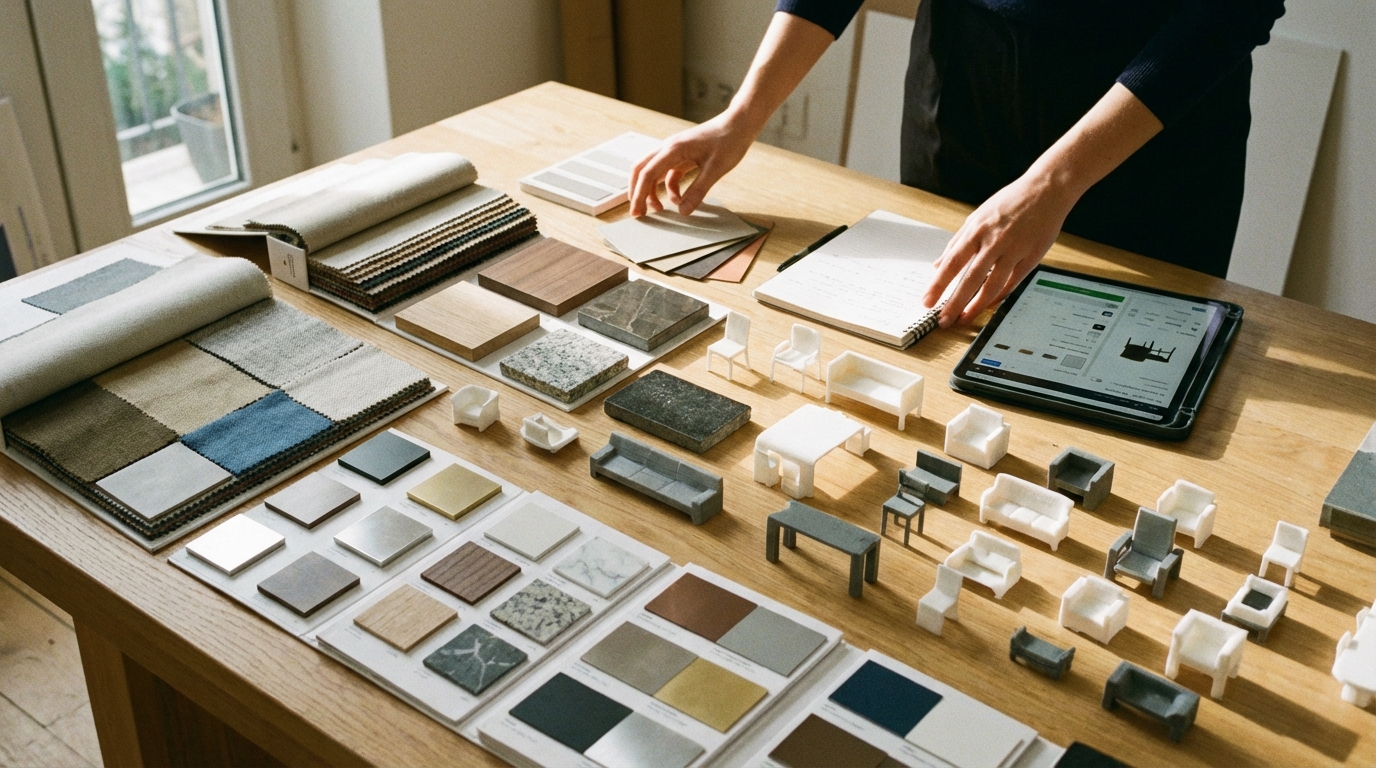
Photo-based configurators were where the industry started. One photograph per finish, layers swapped by hand: the Photoshop era of online retail. Some brands built large systems this way. Then the variants grew. Lighting changed between shoots. Angles drifted. Manual checking replaced automation, and one wrong reflection meant reshooting a whole set. What looked simple became chaos. Our post on the kinds of configurator walks the same curve, from a small controllable setup to one nobody can manage.
Consistency beats realism
When a buyer plays with a configurator, their eye is not chasing realism. It is chasing consistency. Does the colour look the same on the sofa and on the armchair? Does fabric A stay fabric A under different lighting? If yes, trust builds. If not, doubt creeps in.
That is why a configurator that has to scale depends on logical consistency more than on polished visuals. An image-based configurator relies on pictures staying aligned. A 3D one relies on rules. One breaks when people get tired. The other does not.
In our projects the chain is direct: the clearer the visual logic, the fewer support calls, errors and returns. 3D wins on reliability, not on beauty.
The approaches without 3D, and their limits
Photo-based and 2D layer configurators
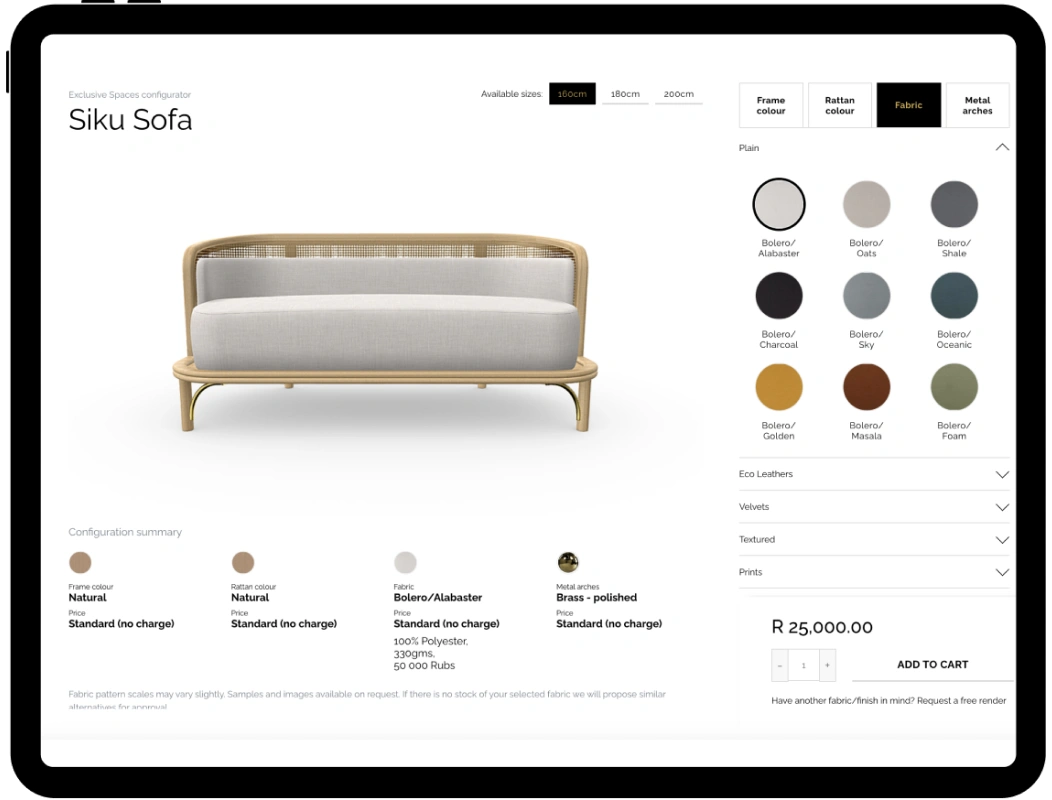
Some brands run well on 2D. Layers stacked with if-then logic: pick a colour, swap a layer; pick a fabric, change a texture. It is clean while the range is small. Cushions, simple tables, decorative pieces.
Stretch it across a modular system, or a product with dozens of parts, and the complexity explodes. Angles stop matching. Shadows stop agreeing. Small fixes pile up every week, and the clever cheap method becomes the expensive one to maintain.
Automation can take over some of the layering and colour logic, which is what Variant Visuals does. But it needs 3D models to do it.
AI-generated images
AI is the new piece of the puzzle. Teams now try AI-generated configurator images almost as an experiment, and one image at a time the results are impressive. Current image models handle texture and lighting convincingly. The problem starts when you look at ten variations in a row.
Fabric tones shift. The same sofa material looks cooler in one image and warmer in the next. Multiply that by hundreds of products and you have a coordination problem. Human review stops being optional. Every image has to be checked on its own and against the rest of the catalogue, and once you count that work the saving is gone.
I often hear that AI is cheaper. That is half true. For a few hundred images, yes. Past a few thousand it flips. When we rendered more than two million visuals for MyBed, each AI image would have cost more than a 3D render once the checking was included. 3D gave predictable timing, uniform lighting and no revision loops.
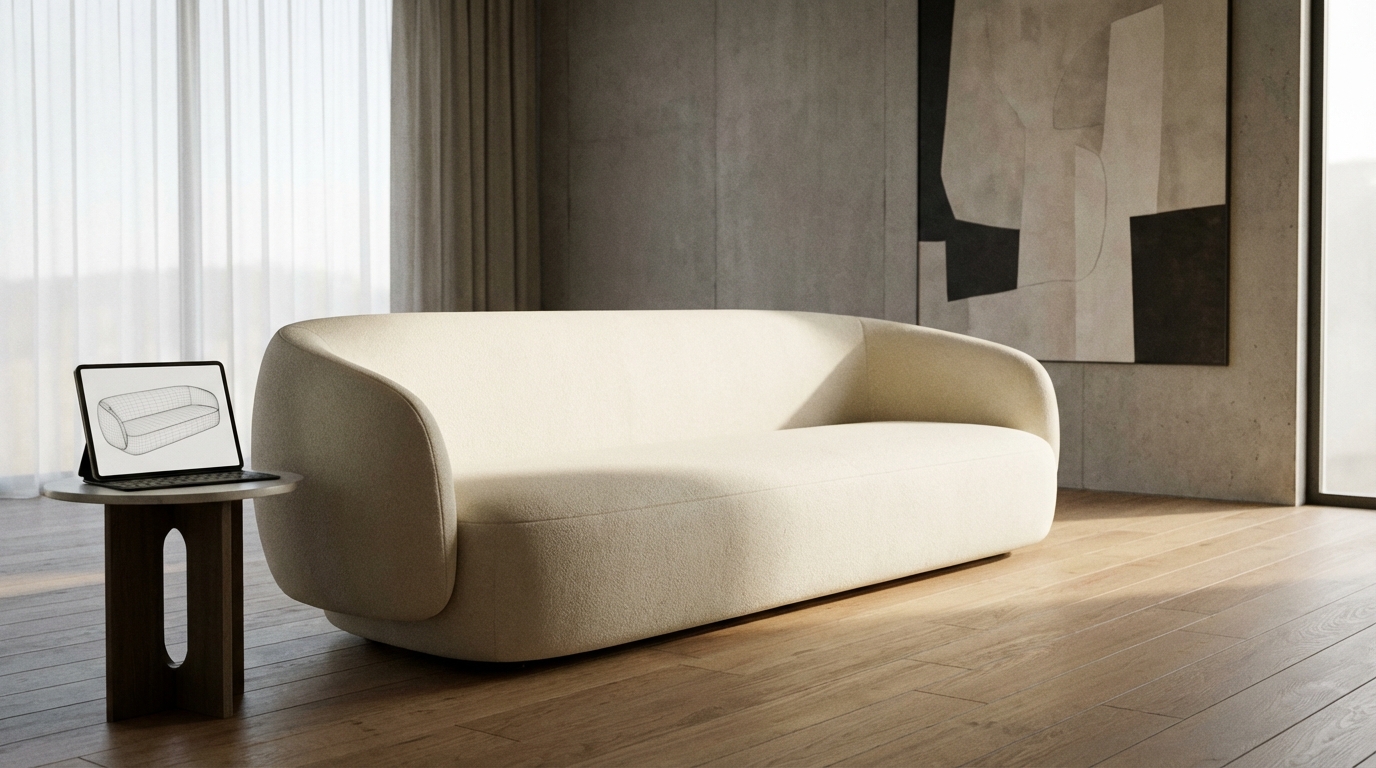
AI still has a real role. It is good at storytelling: lifestyle scenes, backgrounds for social posts, a product placed in a room. That complements a configurator rather than replacing it.
When 3D becomes unavoidable
The decision point is not technology. It is scale. Once you manage hundreds of combinations, a visual system built on photos or AI starts to come apart.
What I usually see go wrong:
- The decision is made on the upfront cost alone. The hidden checking work drains the budget later.
- AI replaces the existing visuals instead of complementing them, and consistency goes with it.
- Visual quality becomes a recurring fight instead of a solved problem.
A simpler way to decide. Stay without 3D if speed matters more than scale and every product fits a fixed set of variations. Go to 3D if your brand promises consistent visuals across products, if you sell modular or builder-type collections, or if you expect thousands of combinations or more.
If that is your world, the configurator has to start with geometry. That is what the Modular Configurator is built on: not cinematic realism, but predictable logic, cost control and trust.
Non-3D methods keep their place. They are fine for a first launch, for simple products, for a fast test of a new range. Over the years, though, every brand that grows moves to 3D, not because it is fashionable but because it is stable.
Before you decide, look at your catalogue and ask three things:
- How many variants do you have today?
- How many next year?
- What will inconsistency cost you at that size?
The answer is in predictability, not in pixels.
What comes next
If the answer is 3D, the next question is what a model costs to prepare and what you already have that can be reused. The Costs category puts numbers on that. If you are weighing vendors, Comparisons is the rubric we use ourselves.